Data Science and Nuclear Engineering:
A Perfect Match
Dr. Madicken Munk
University of Florida
2020.02.20
About Me:





About Me:





What is Data Science?
“ [A] data scientist is someone who knows how to extract meaning from and interpret data, which requires both tools and methods from statistics and machine learning, as well as being human. They spend a lot of time in the process of collecting, cleaning, and munging data, because data is never clean. This process requires persistence, statistics, and software engineering skills—skills that are also necessary for understanding biases in the data, and for debugging logging output from code. ” - O'Neil and Schutt, 2013.
“ [An] academic data scientist is a scientist, trained in anything from social science to biology, who works with large amounts of data, and must grapple with computational problems posed by the structure, size, messiness, and the complexity and nature of the data, while simultaneously solving a real-world problem. ” - O'Neil and Schutt, 2013.
Differences between Data Science and Nuclear Engineering?
How about the Similarities?
Communication: Clear, readable results for domain and non-domain experts. Strong data visualization.
Domain Expertise: Deep understanding of the data and how it relates/applies to the problem
Heterogenous Tools: Full computational toolchain will involve multi-language tooling, expertise
Data Cleaning: All data needs to be clean!
Reproducibility: tools (git, hg, svn), analysis (jupyter notebooks), methods (papers, blogs), software (versioning, stability)
Scalability: Methods and analysis must scale from local machines to large, "production" compute nodes
Ethics: Use and/or implement tools/algorithms ethically
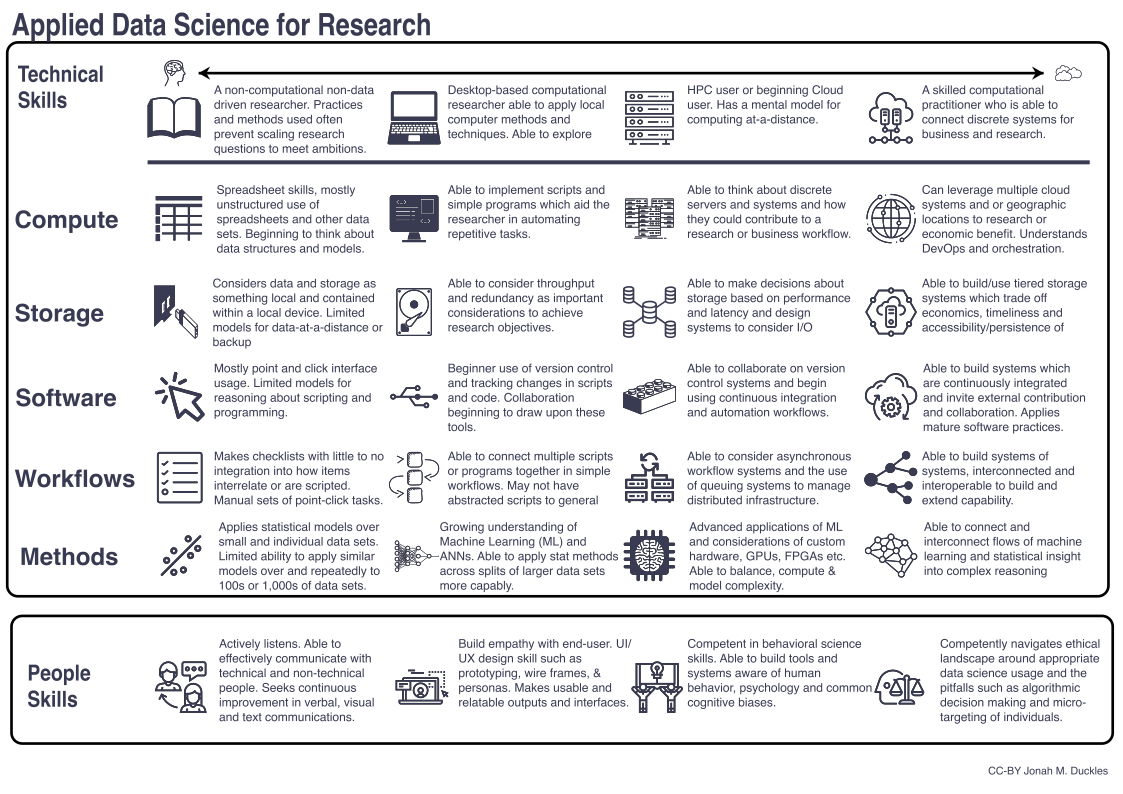
What about the Skills?
Programming, SQL, Math/Stats, ML Algorithms, DataViz, Communication, Cloud Computing, Software Engineering, Automated ML, Domain Expertise
Heterogenous data sources, trustworthy AI/methods, Automation, Privacy, Ethics
Packaging, Production Code Development, Version Control, Reproducibility, Sharing Data/Analysis
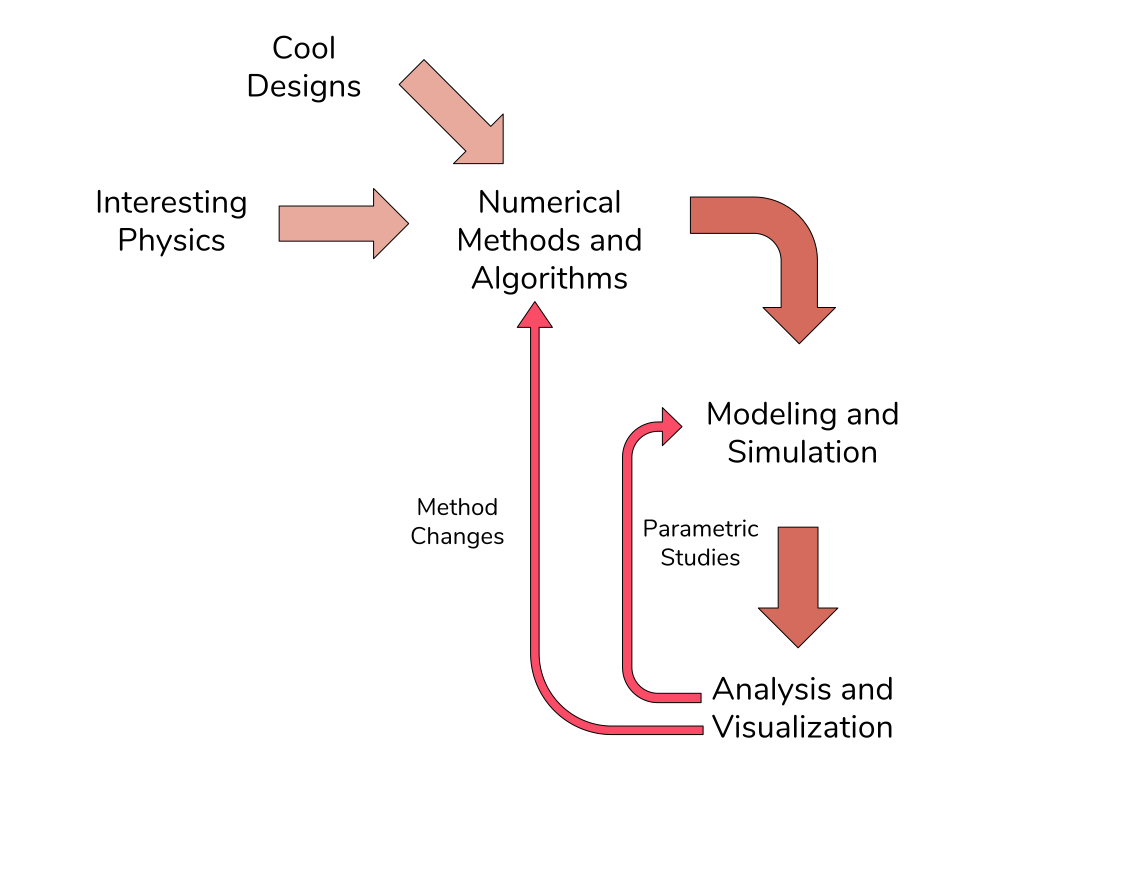
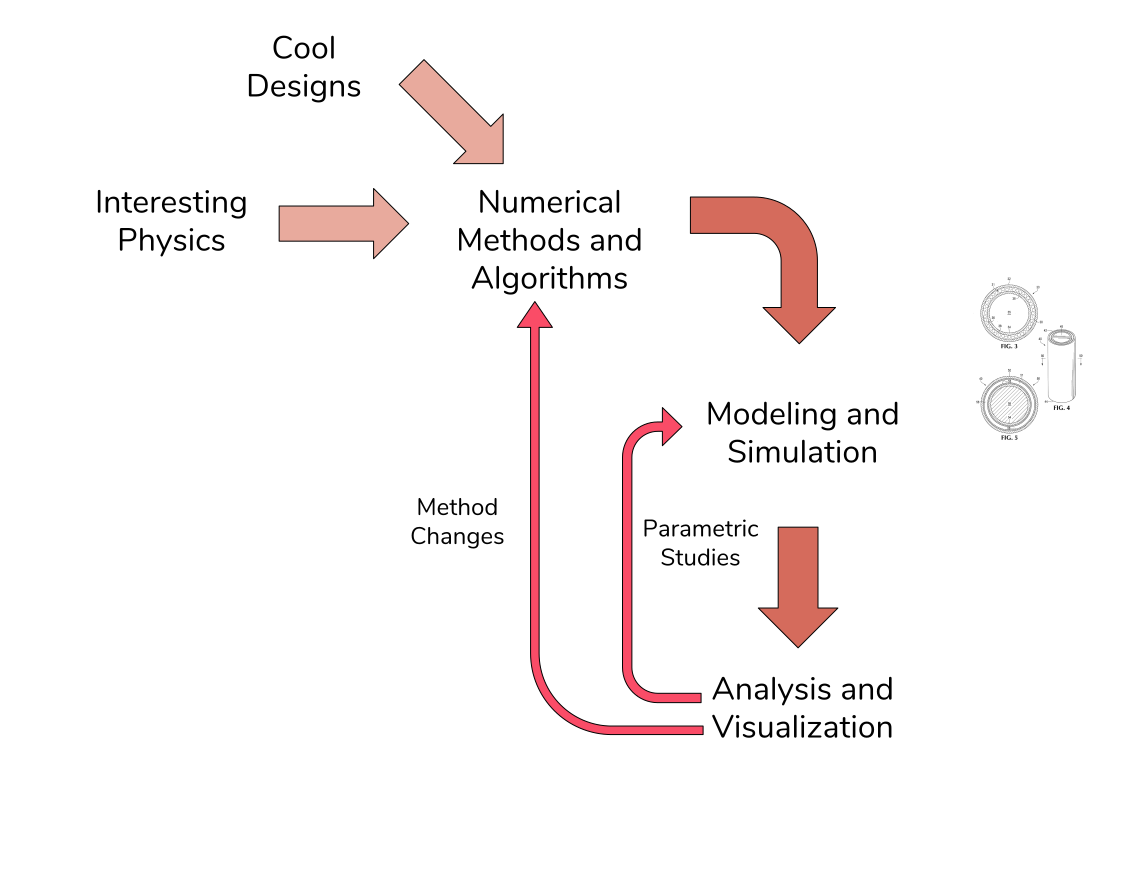
The Computational Landscape: Engineering
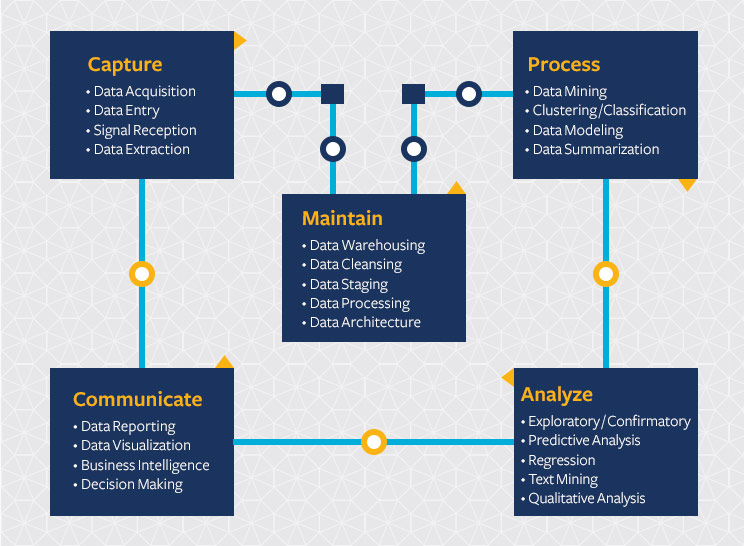
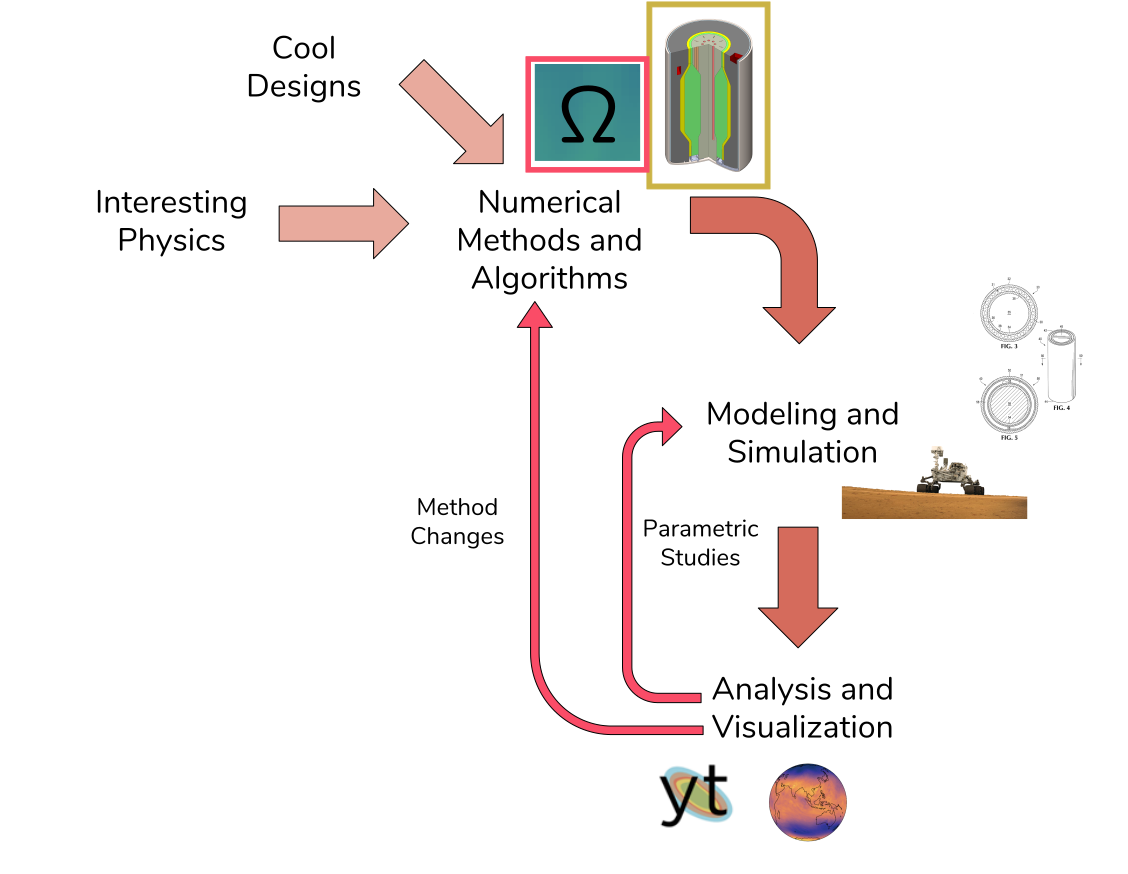
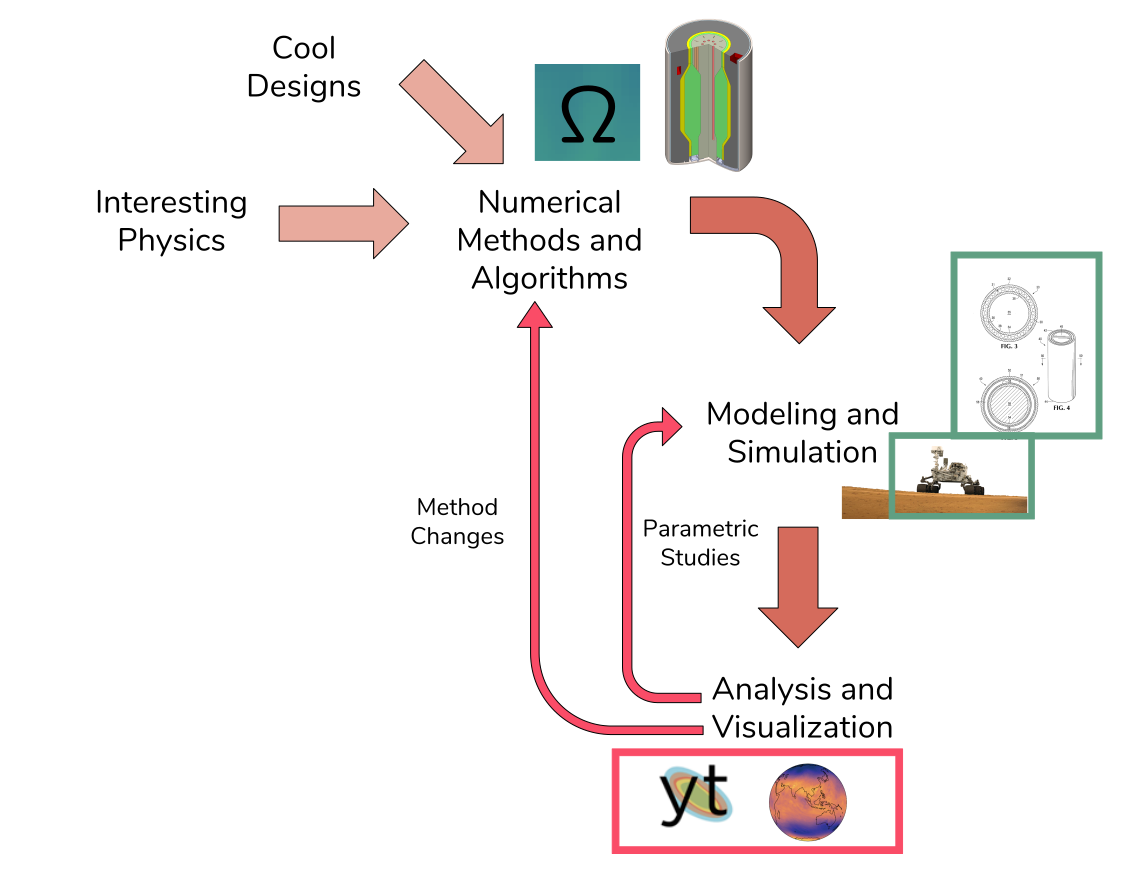
The Data Science Lifecycle
Key Takeaway:
Data Science and Nuclear Engineering (Scientific Computing) are Family!
The Computational Landscape
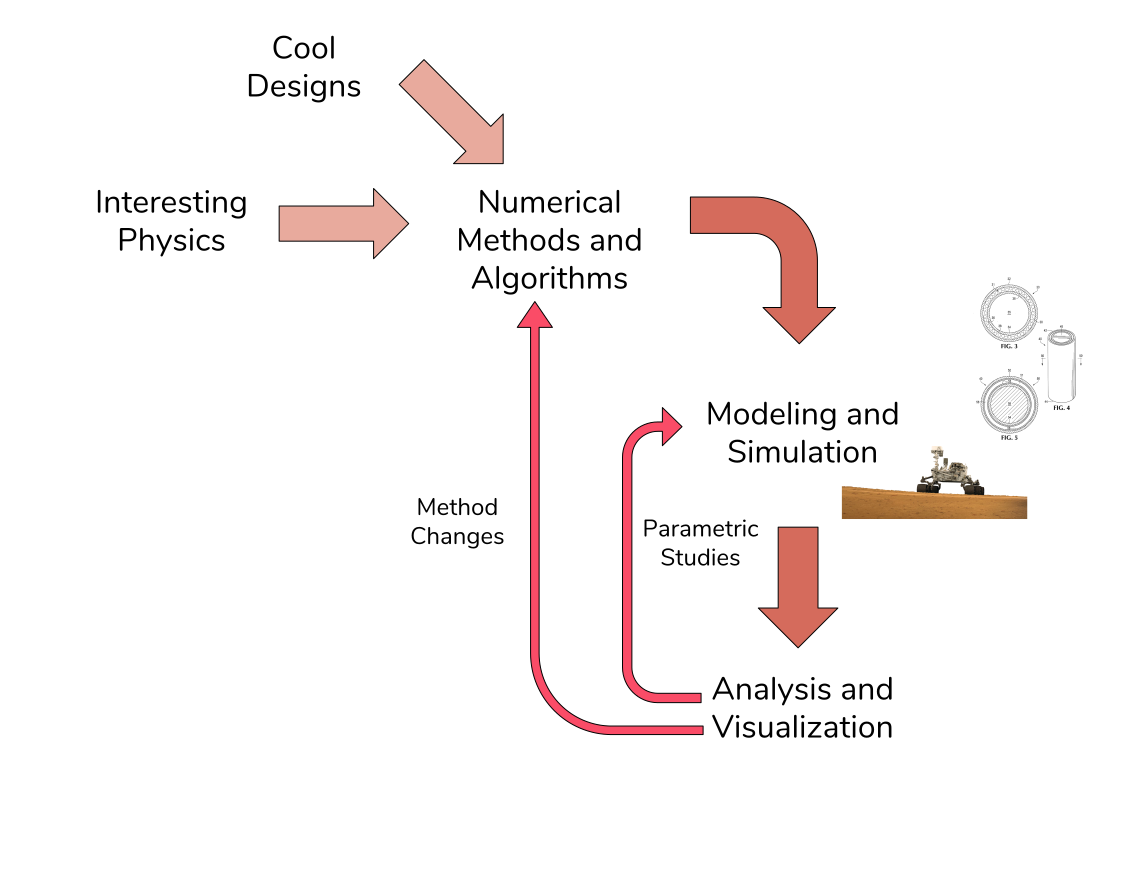
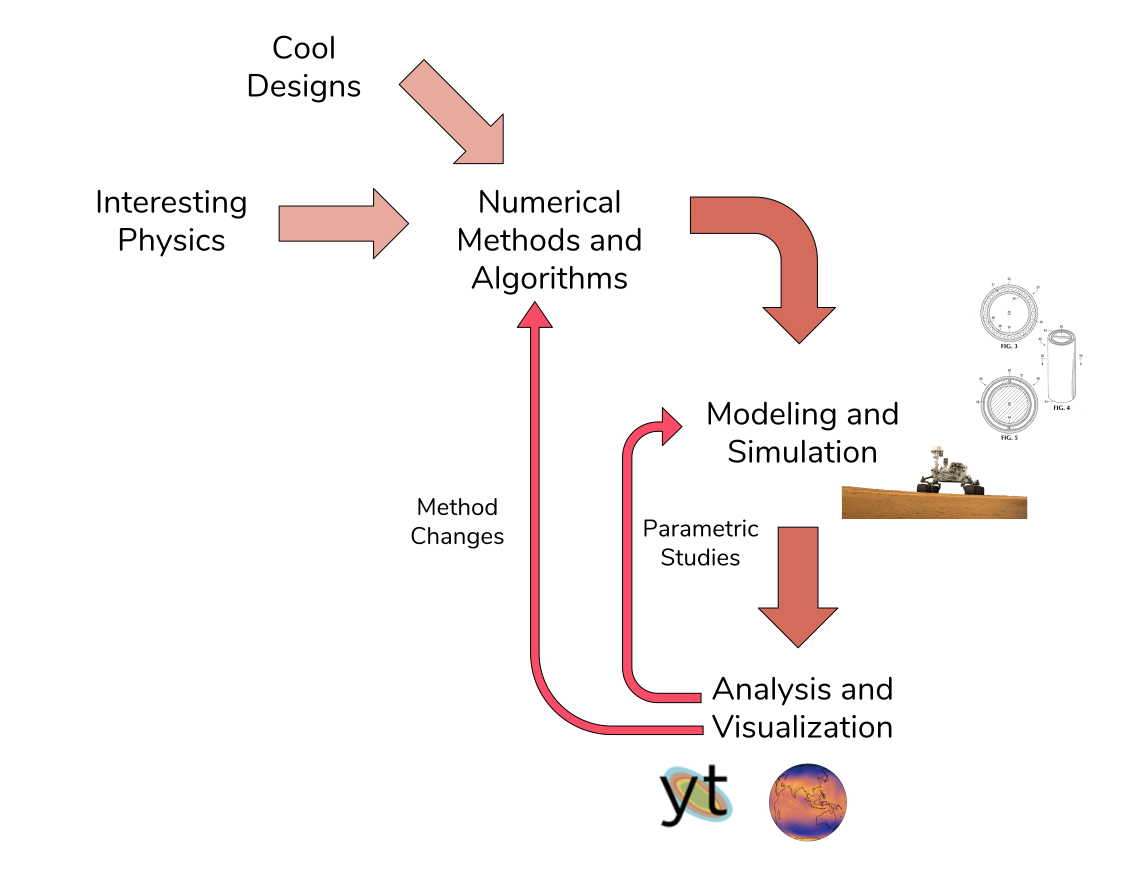
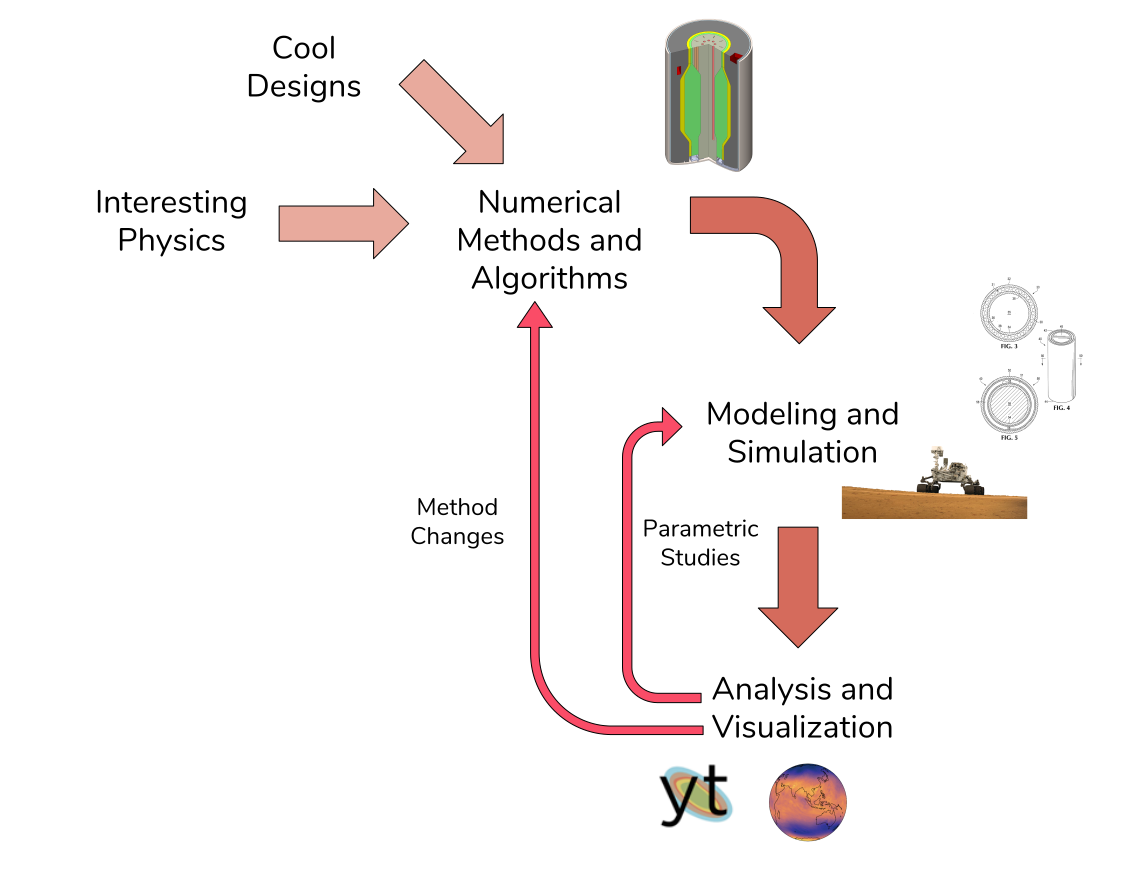
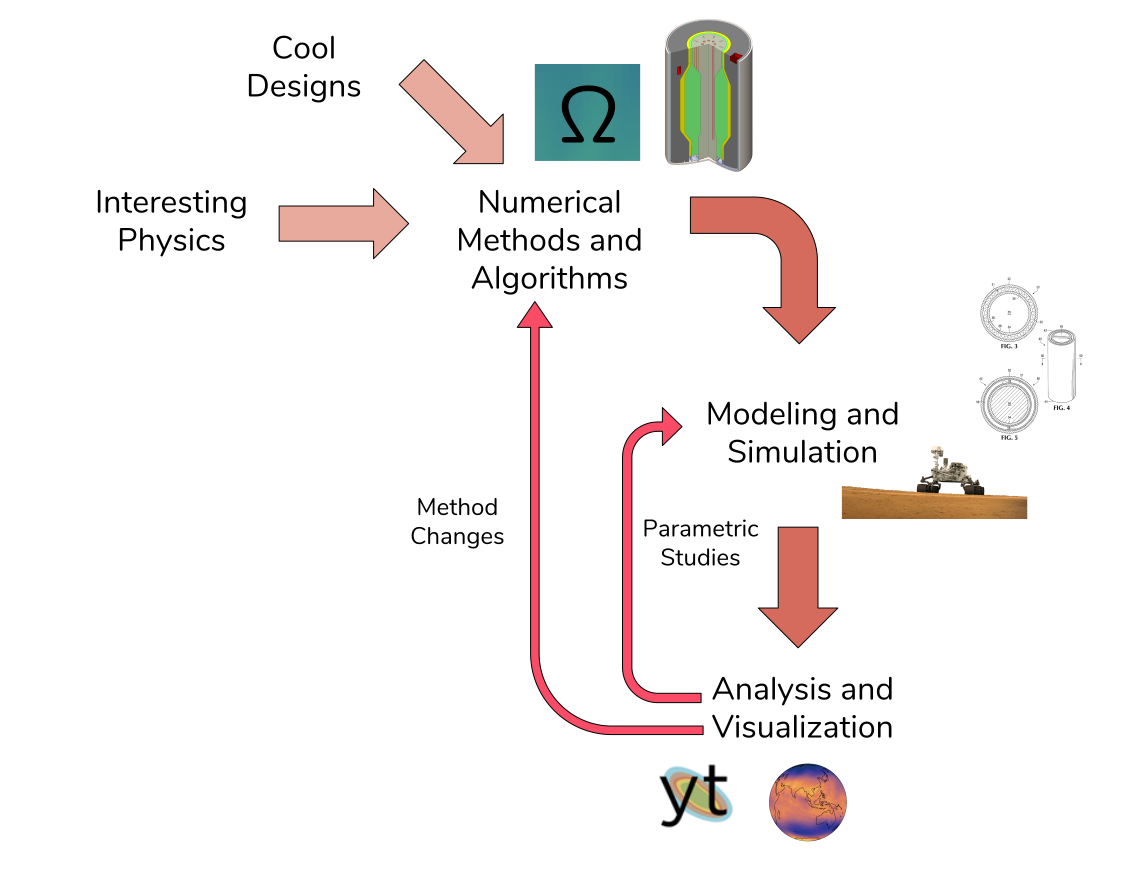
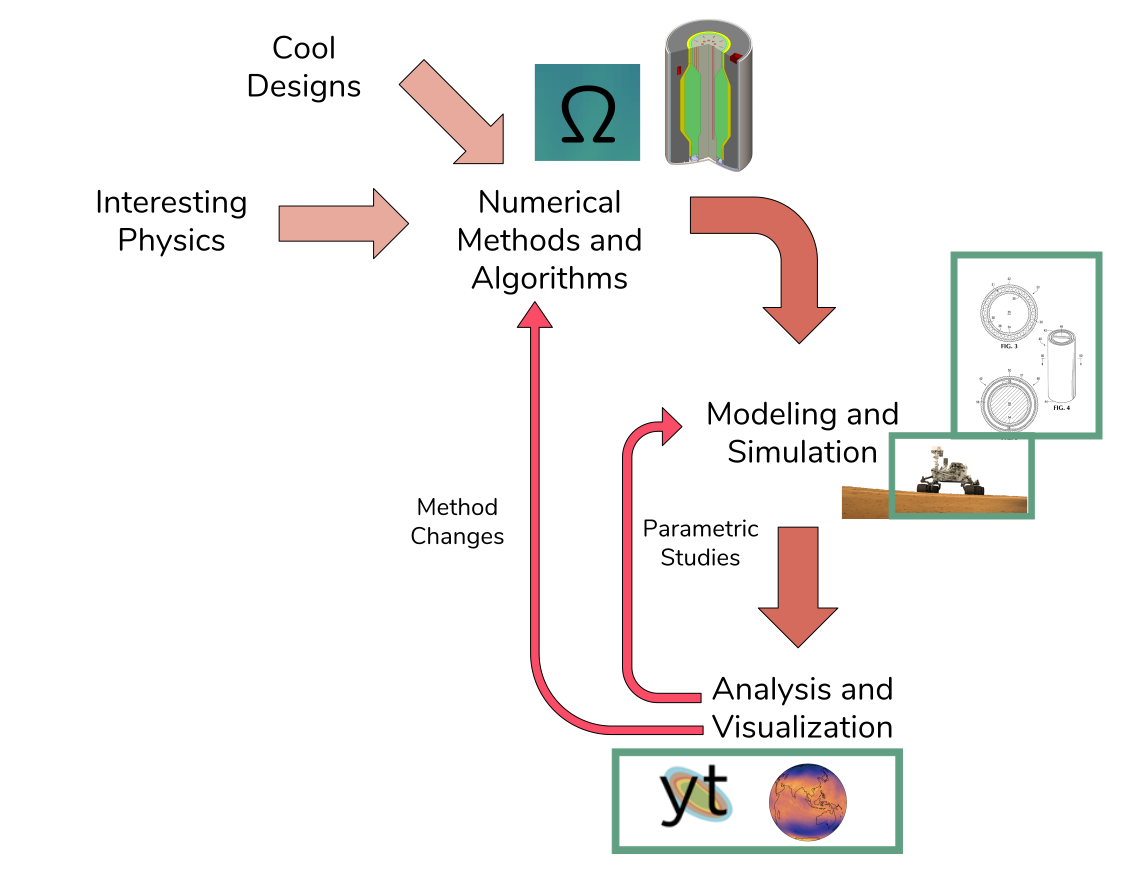
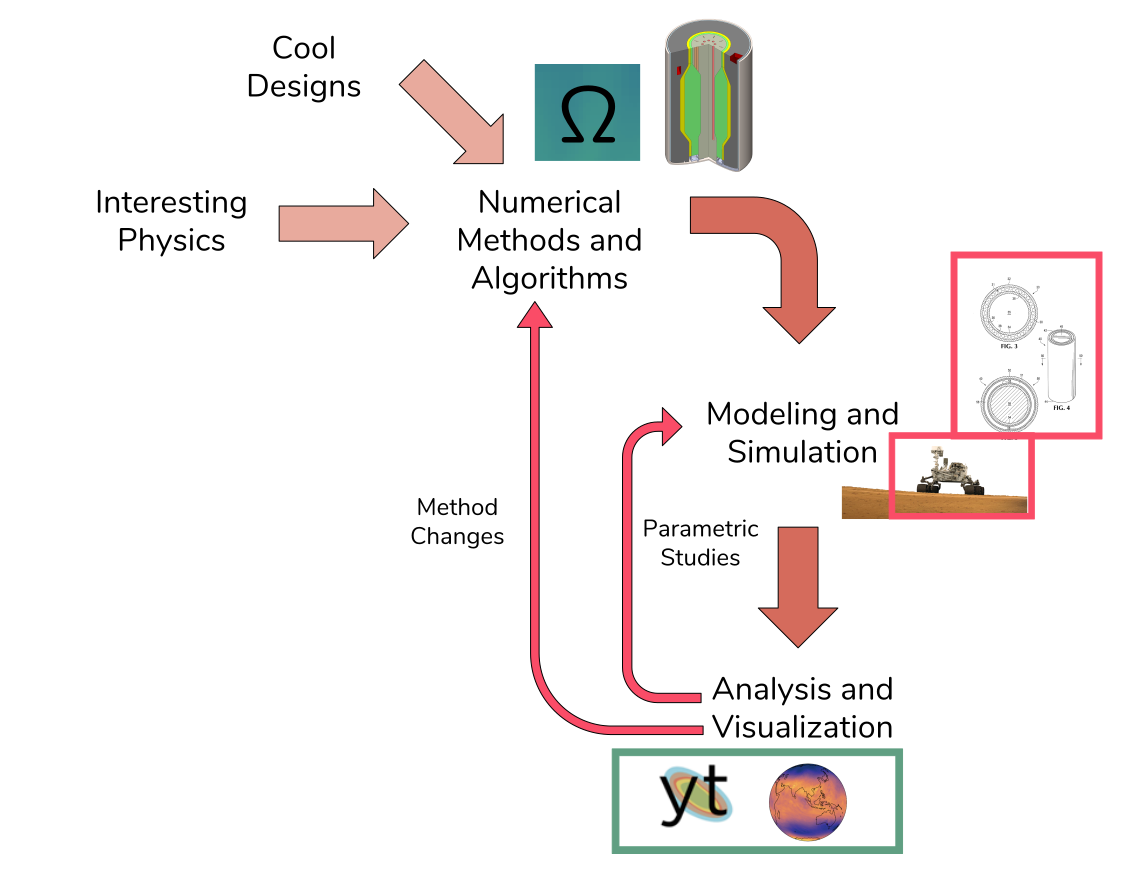


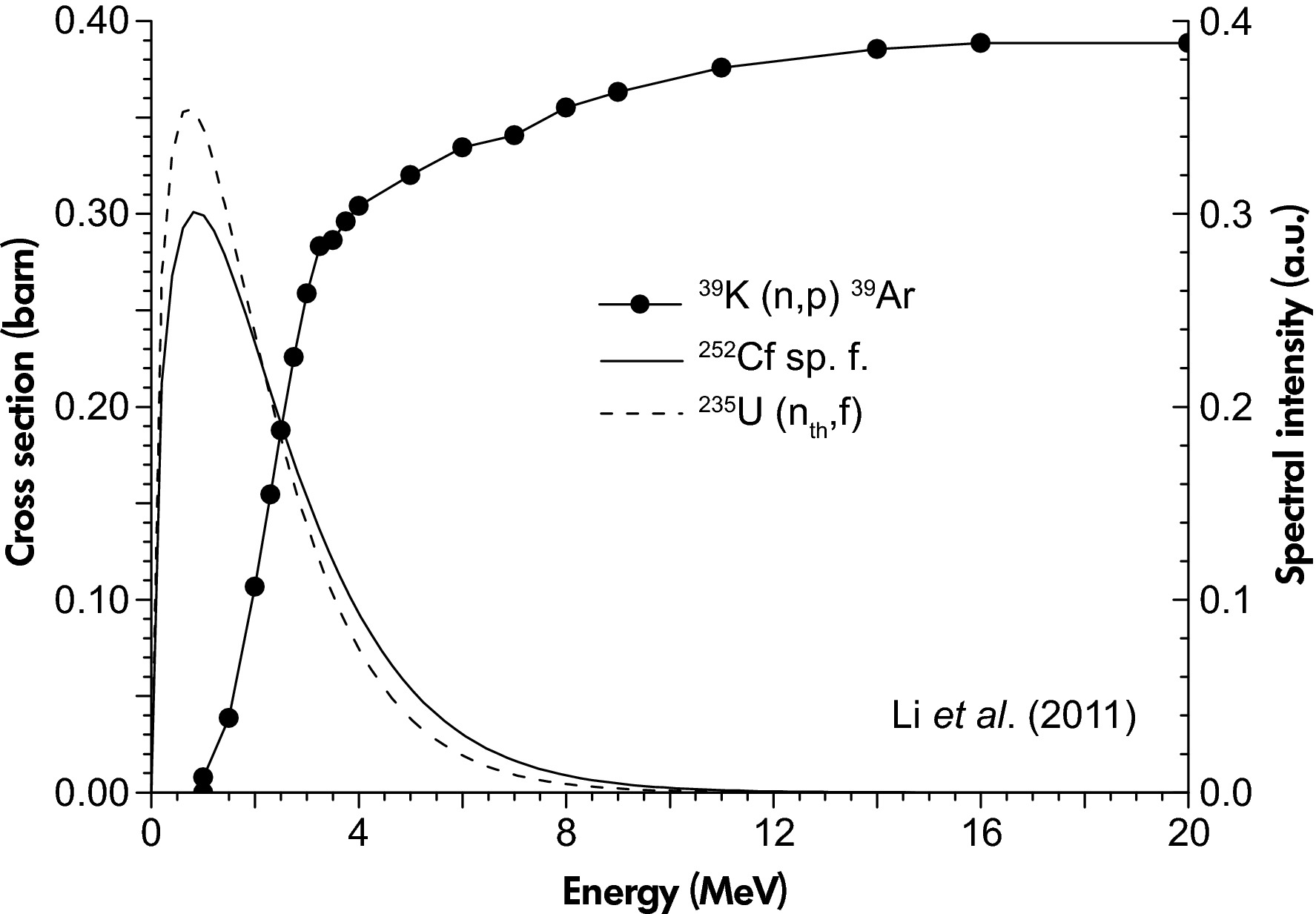
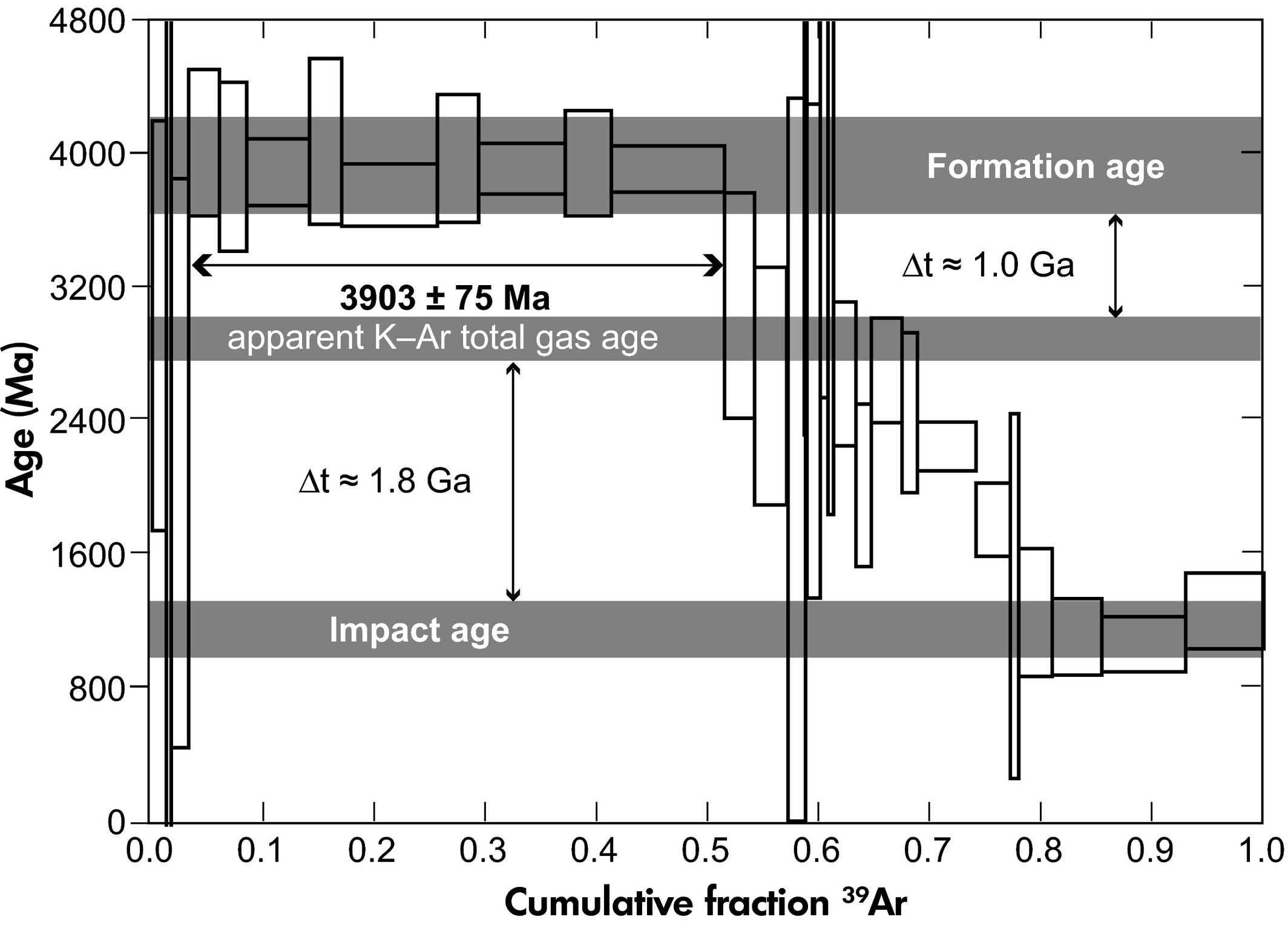
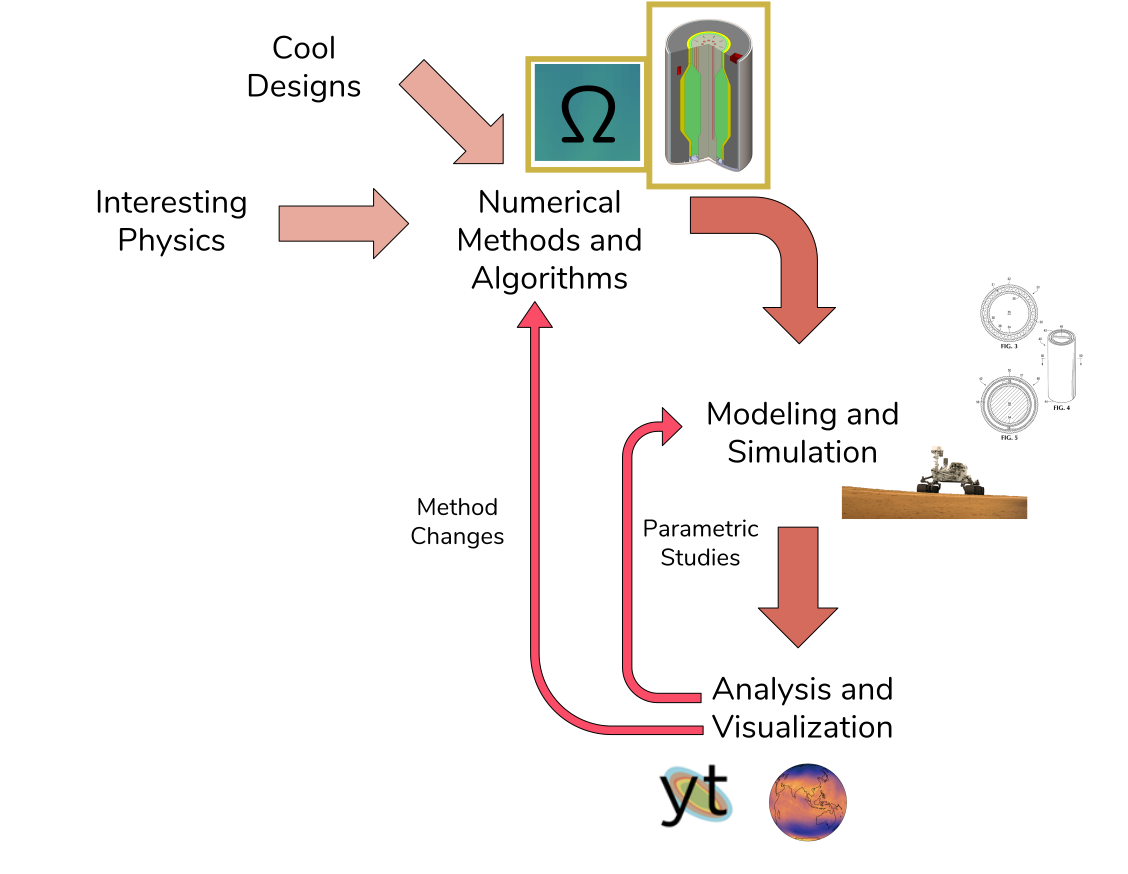
Key Takeaways from the Rover Source
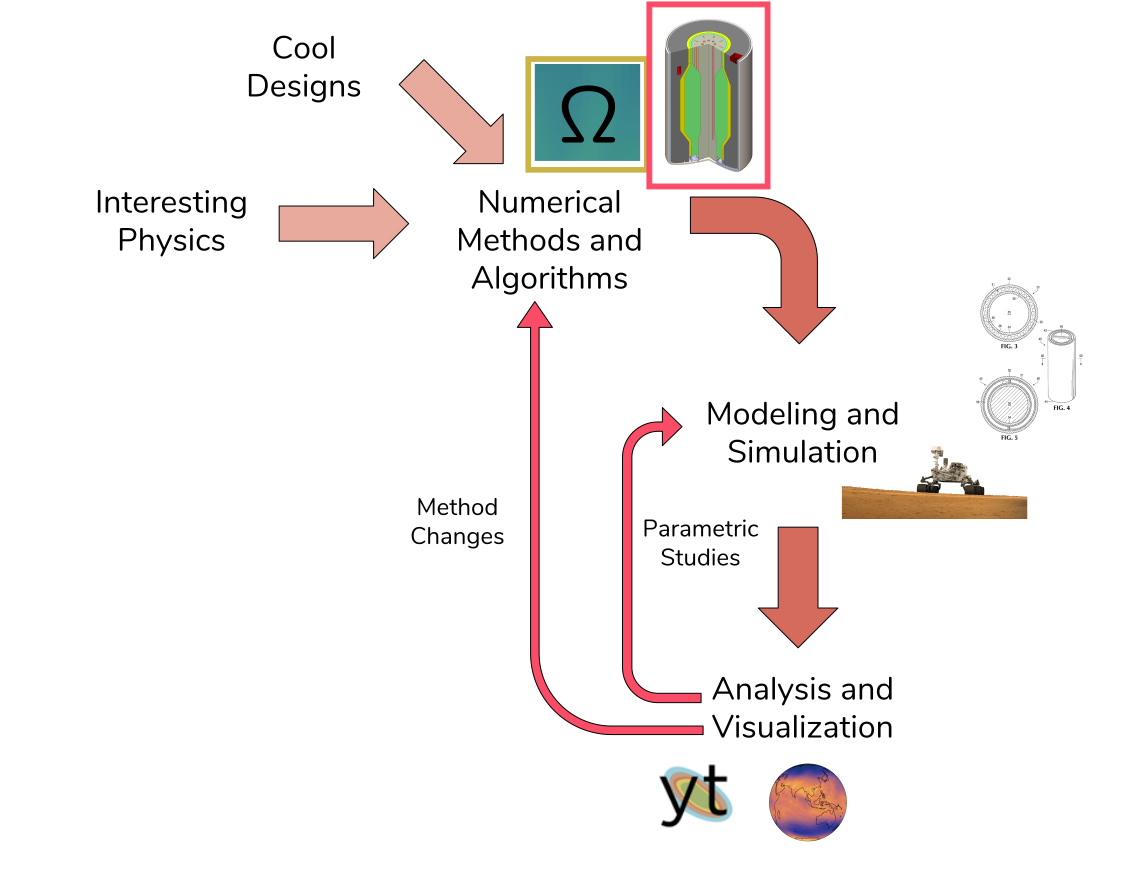
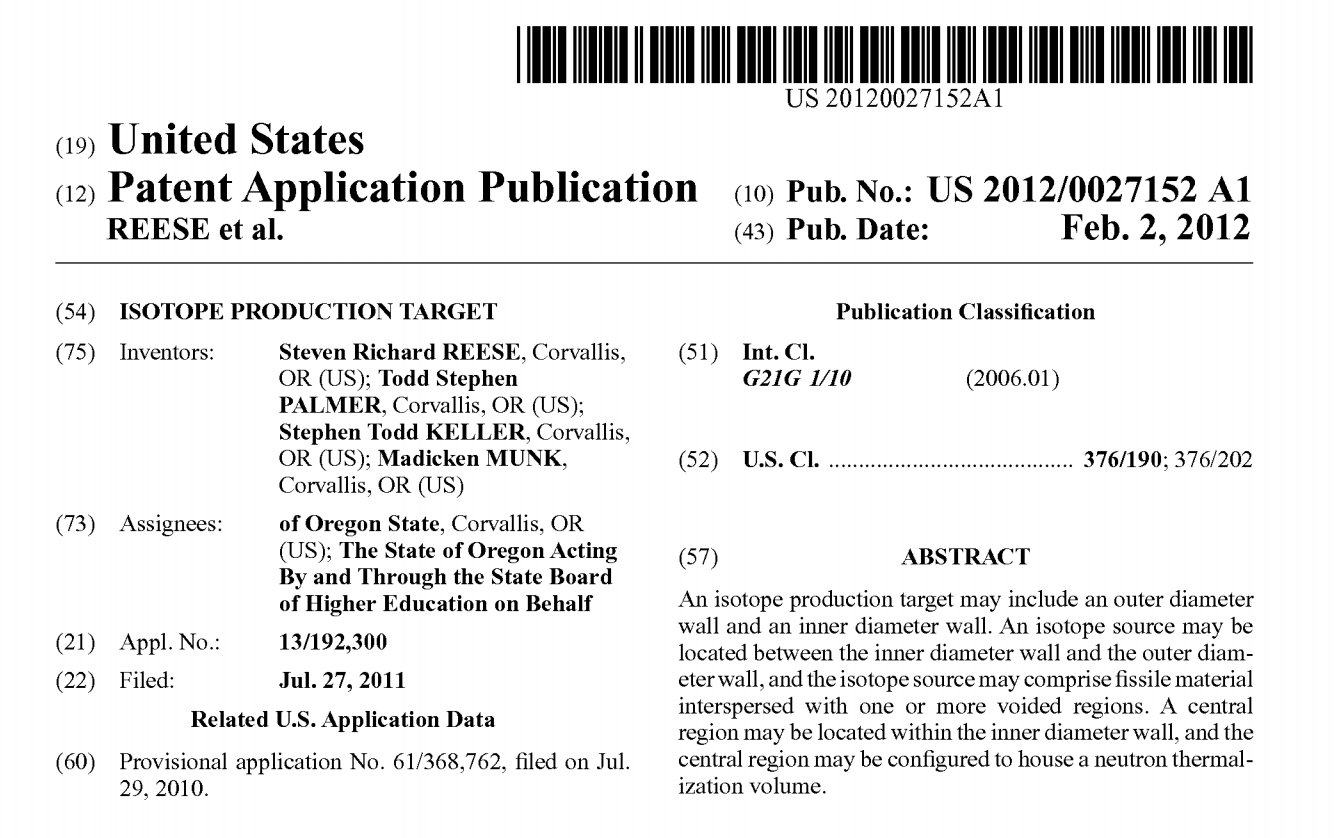
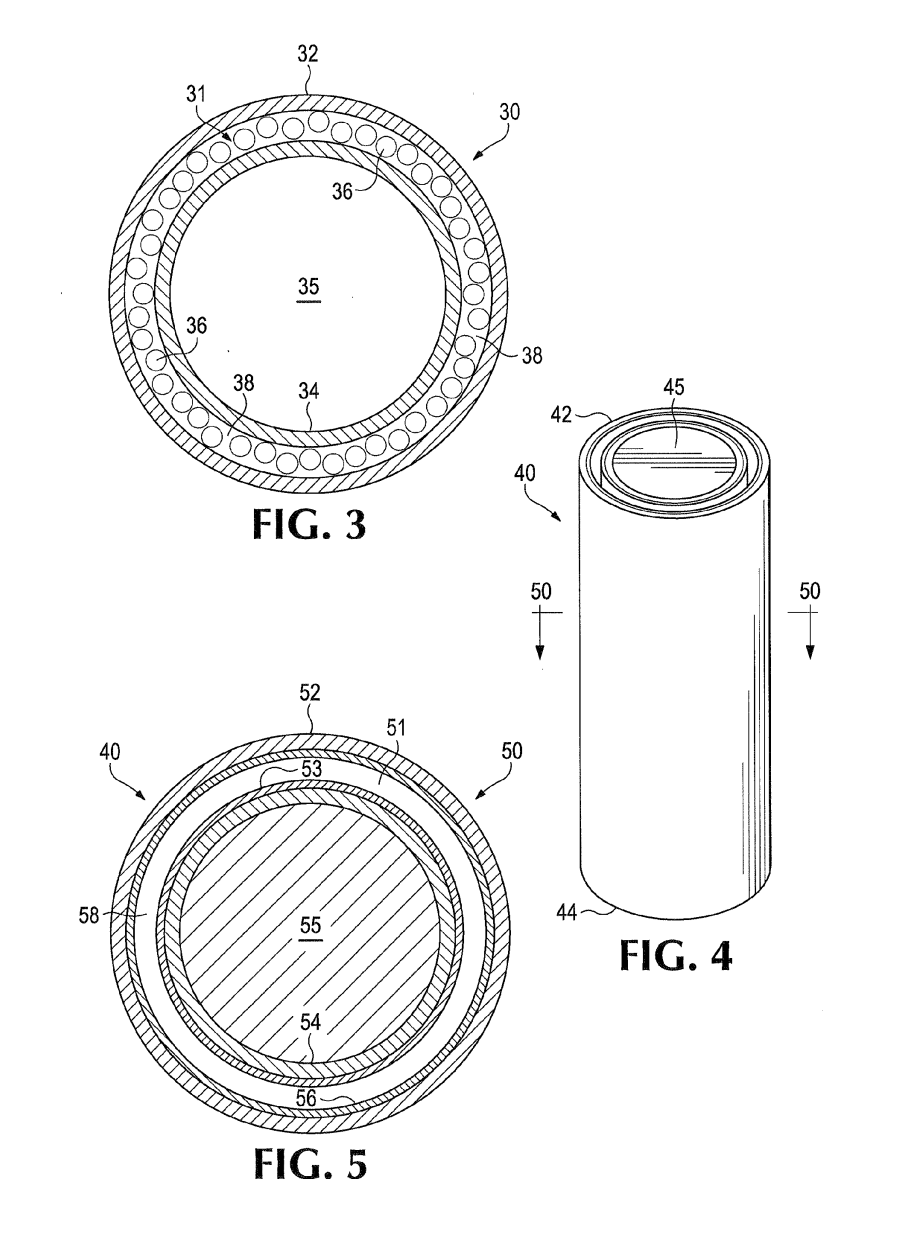
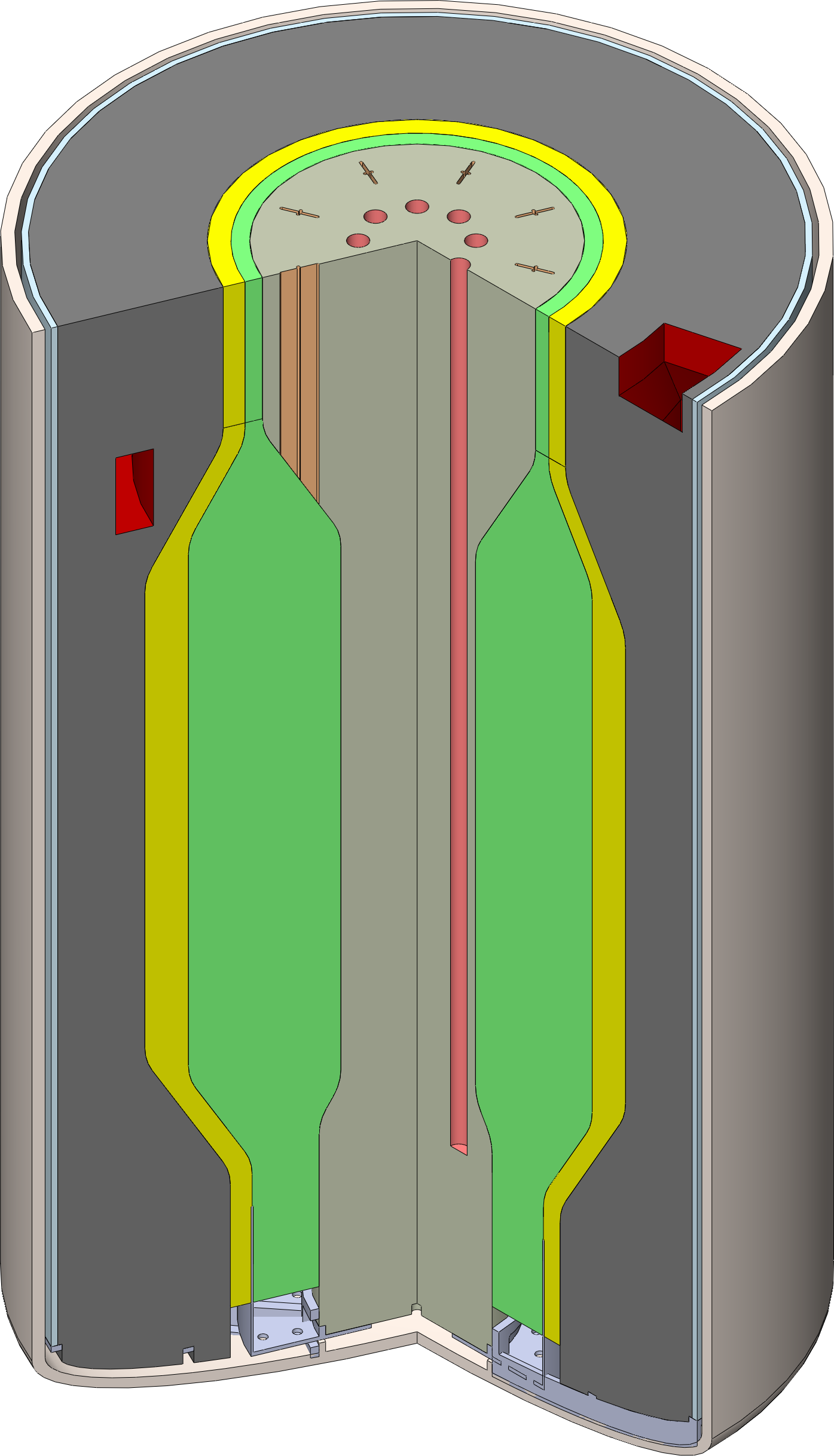
The PB-FHR MK-1 Design
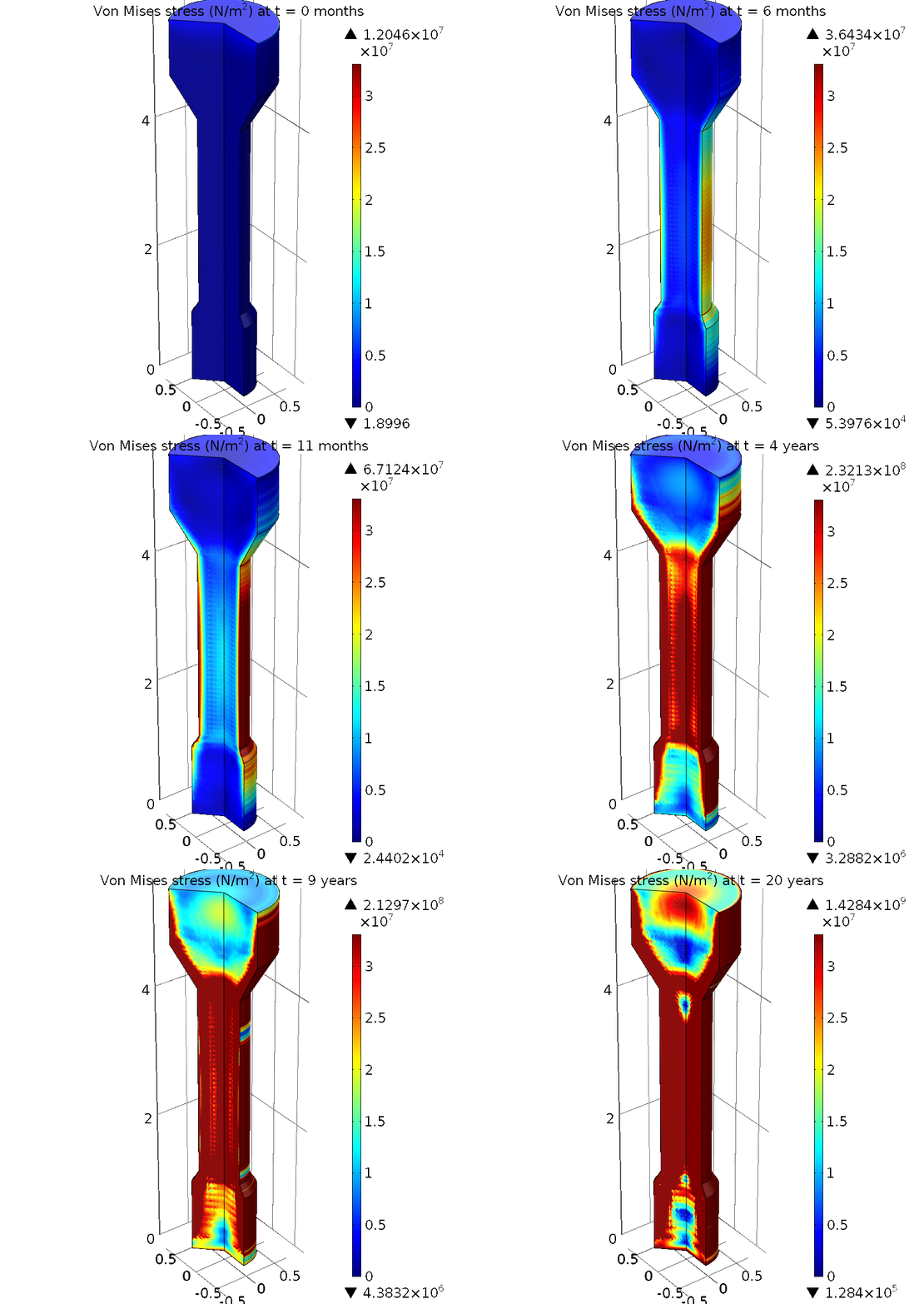
Central Reflector Lifetime Estimates
Key Takeaways from the Lifetime Estimate
Deep Dive: Why Variance Reduction?
- Radiation shielding is important
- "Analog" Monte Carlo is not ideal for these problems
- Lots of particles → good statistics
- Good shielding → very few particles
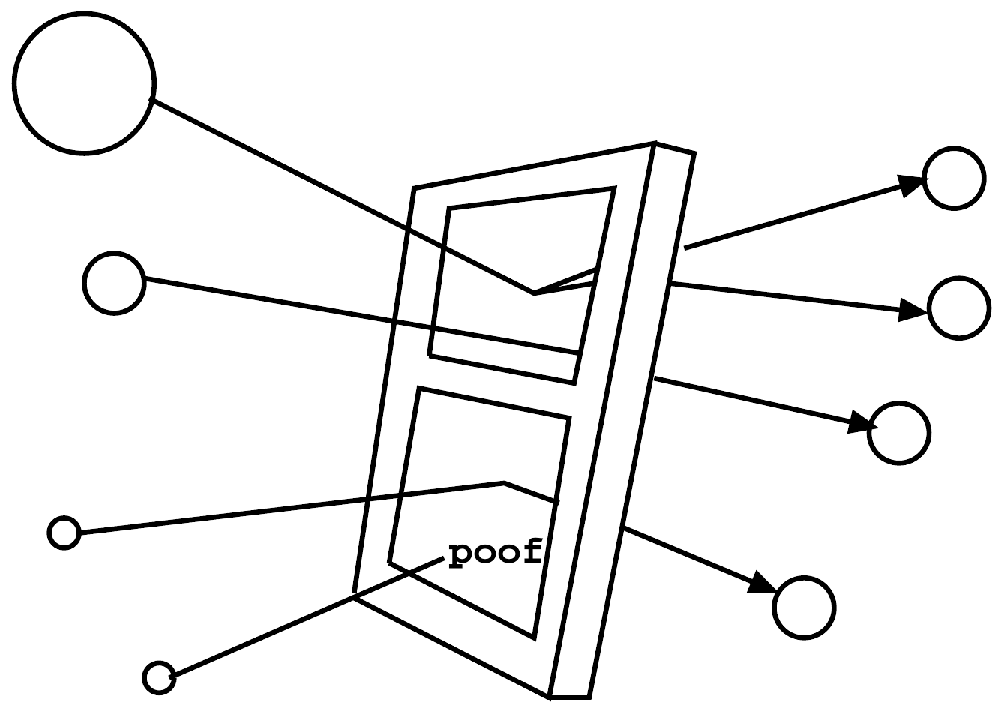
Image Credit: MCNP, X. Monte Carlo Team, MCNP–A General Purpose Monte Carlo N-Particle Transport Code, Version 5. LA-UR-03-1987, Los Alamos National Laboratory, April 2003.
Deep Dive: Hybrid Methods
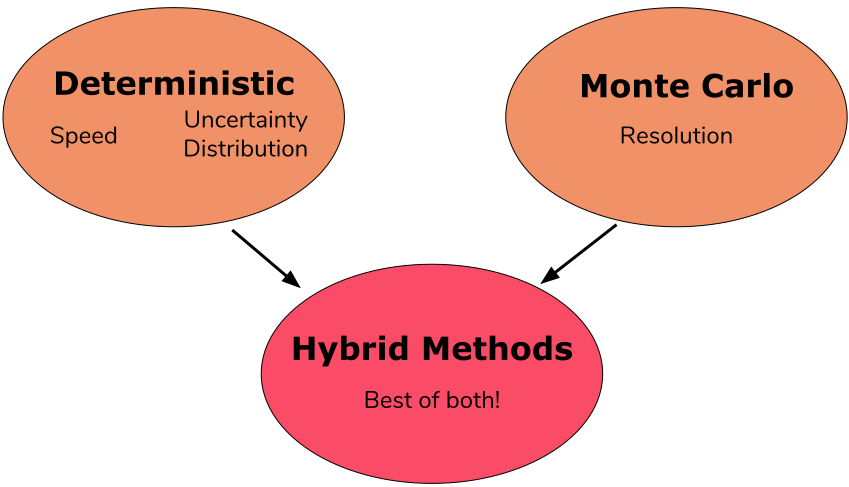
- Deterministic solution used to create importance map
- Importance map → Monte Carlo → improves solution, reduces time
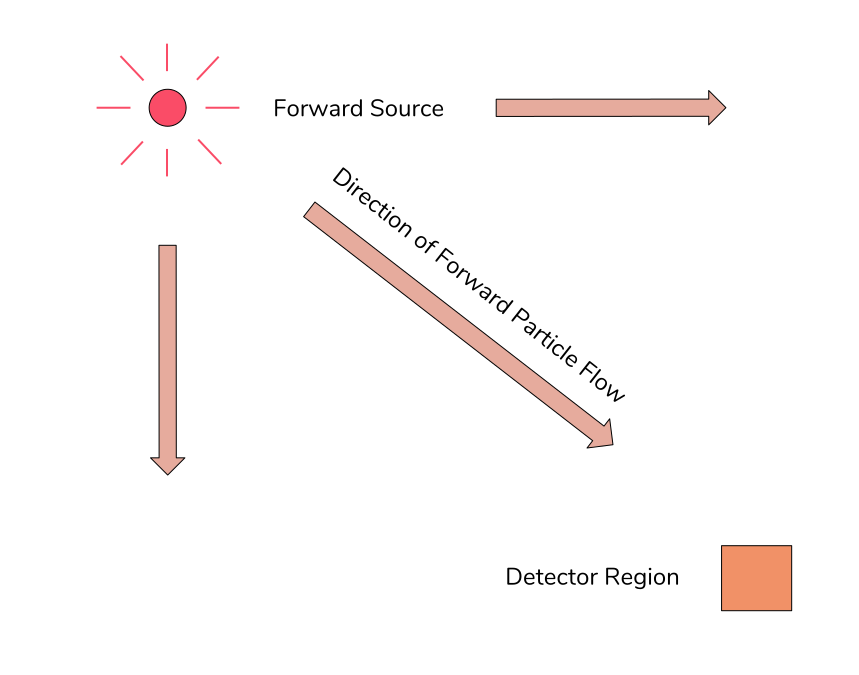
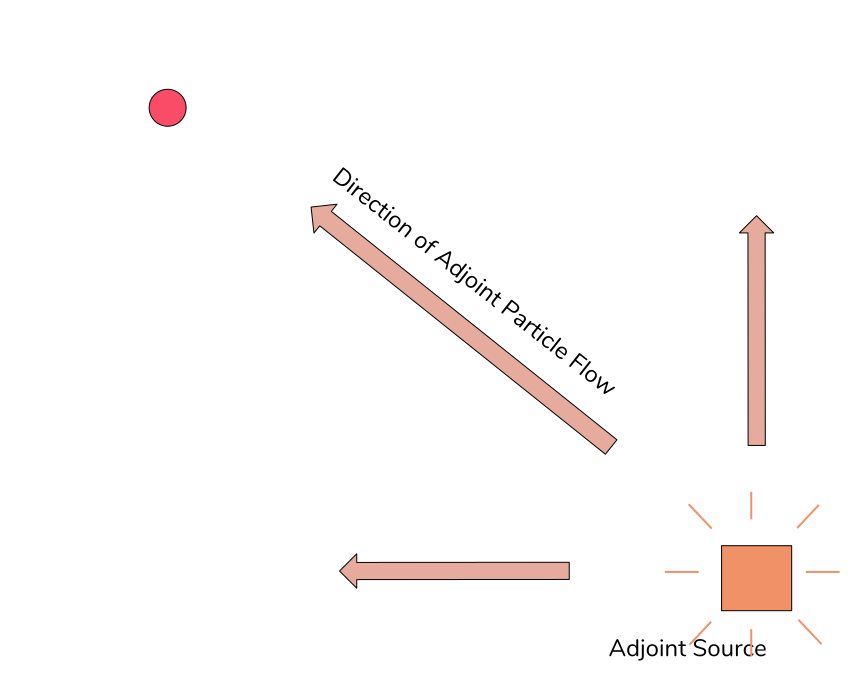
- Importance: contribution to a tally
- Common solution: use deterministic solution to adjoint equation for importance map.
A Forward Problem
An Adjoint Problem
A Simple Labyrinth
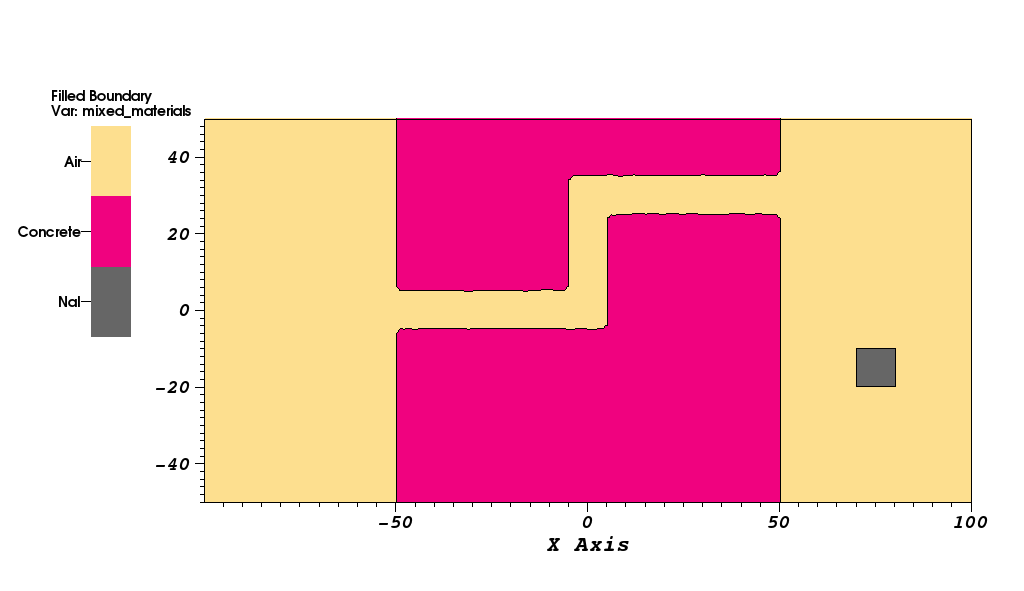
- Point source
- NaI detector, concrete barrier
- Vacuum boundary conditions
- NaI reaction rate with track length tally (f4)
- Tally energy binning consistent with XS library
- 27g19n XS library
- QR quadrature
- SC solver
- P$_N$ order 3
General:
Monte Carlo specific:
Denovo specific:
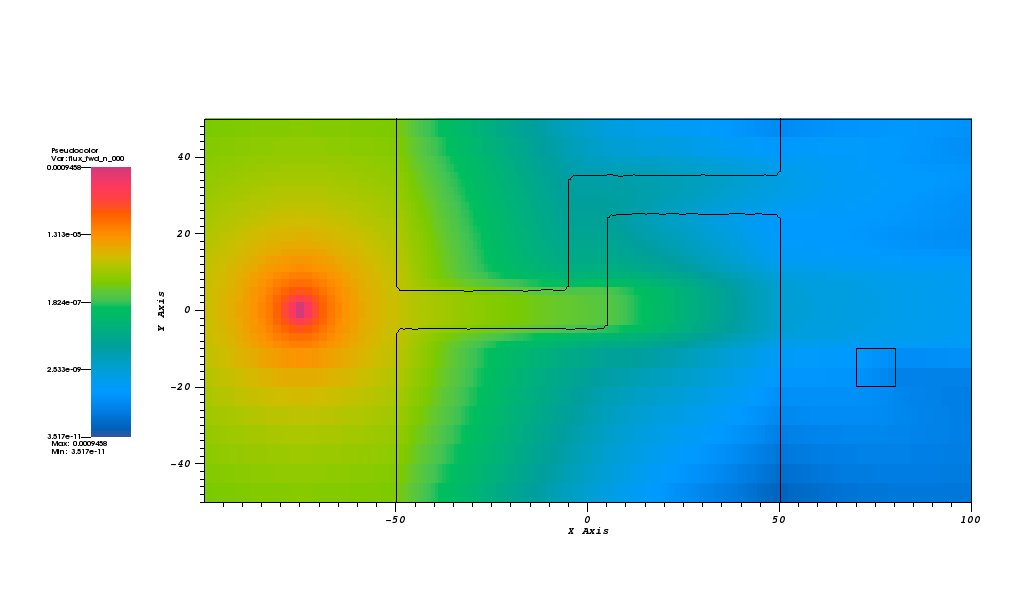
Forward Flux
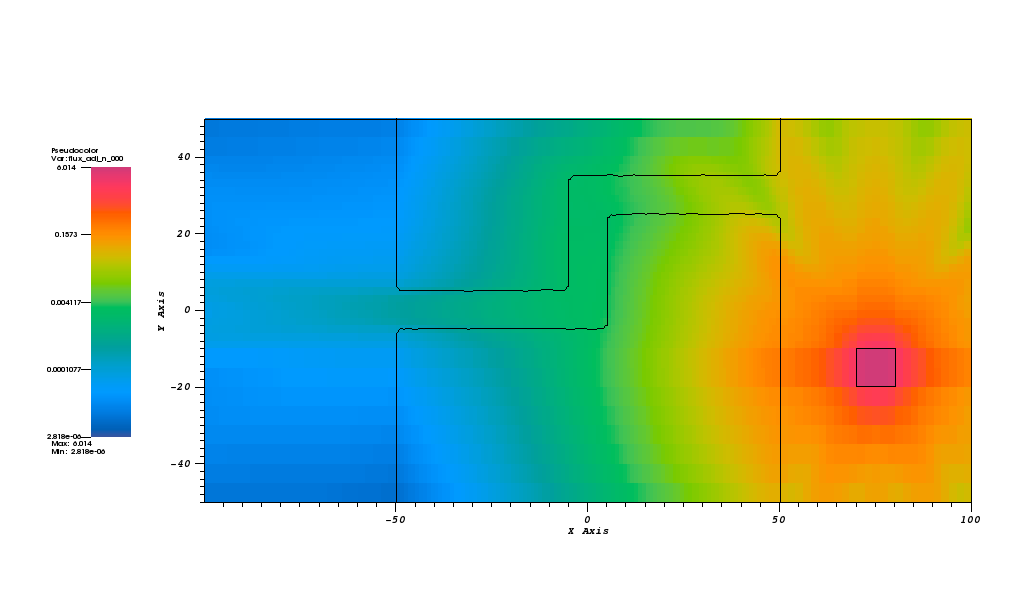
Adjoint Flux
Angle Isn't Captured
Explicit angle biasing is difficult
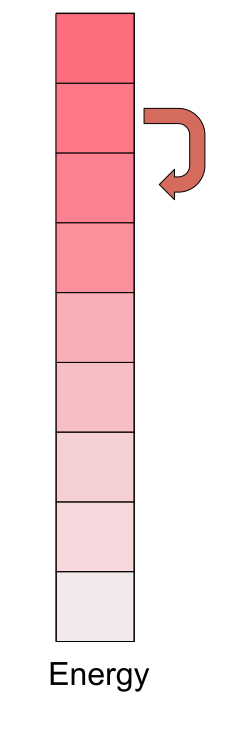
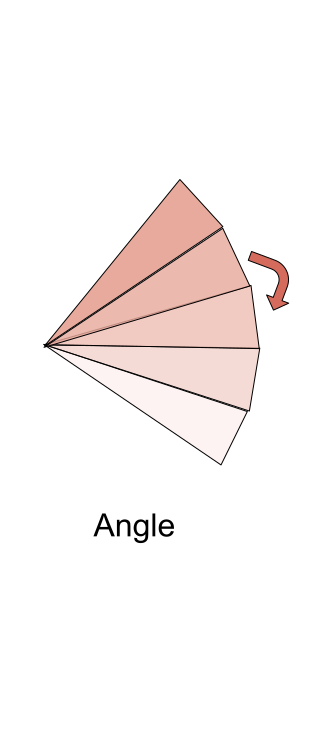
The $\Omega$ Flux
\[ \phi^{\dagger}_{\Omega}(\vec{r},E) = \frac{\int{\psi (\vec{r}, E, \hat{\Omega}) \psi^{\dagger} (\vec{r}, E, \hat{\Omega})}d \hat{\Omega}} {\int{\psi (\vec{r}, E, \hat{\Omega}) d \hat{\Omega}}} \]- Uses angular flux → More angular information is captured in importance map
- Generates scalar flux → Can be used in existing methods
- Weights by the forward flux → Direction of particle flow is captured
Adjoint Flux
Used by CADIS
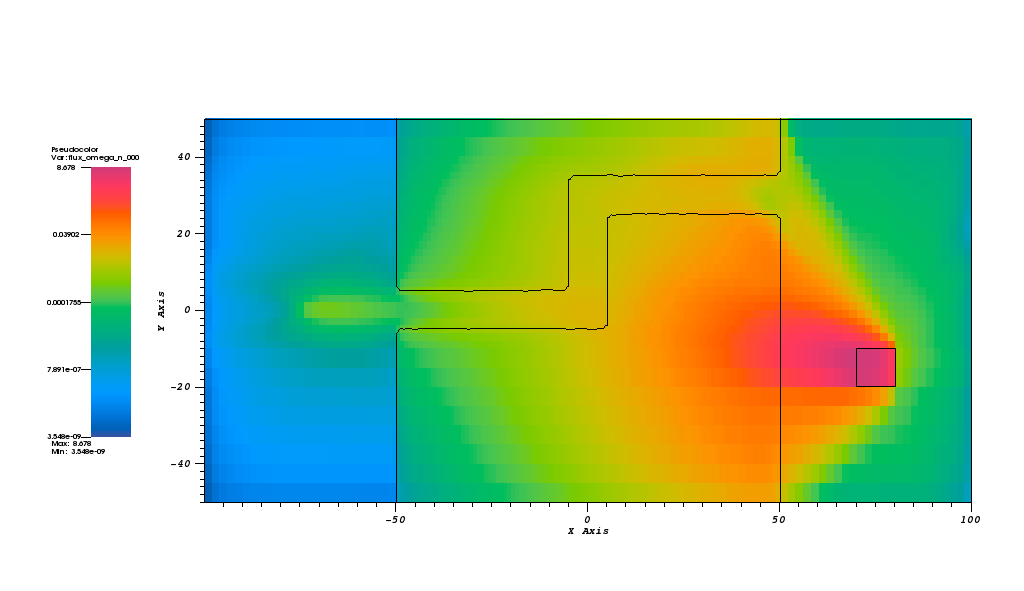
$\Omega$ Flux
Used by CADIS-$\Omega$
Flux Anisotropies
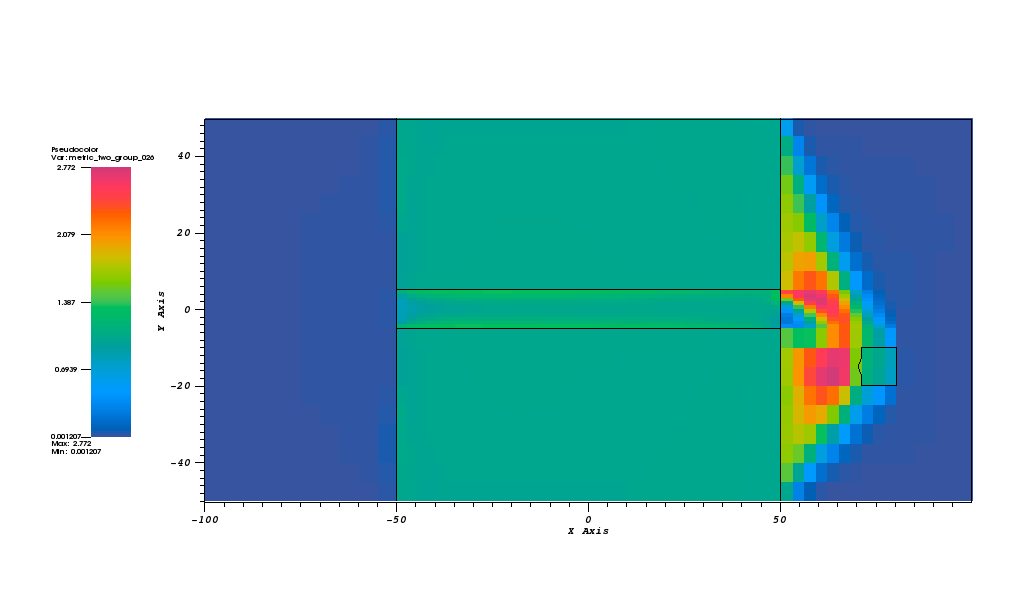
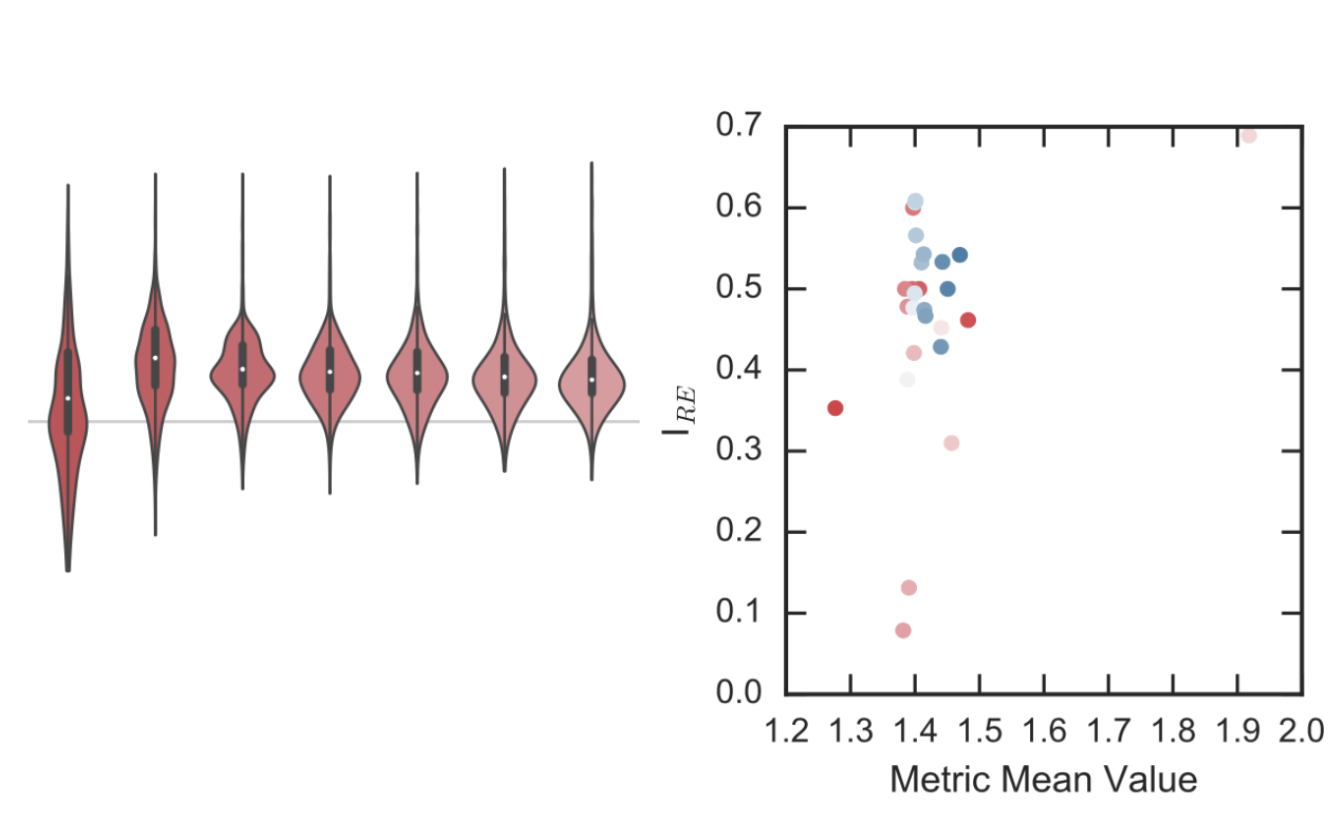
Anisotropy Metric 2 ( $\phi^{\dagger}_{\Omega}/\phi^{\dagger}$ ) Distribution, Group 26 for Steel Beam in Concrete
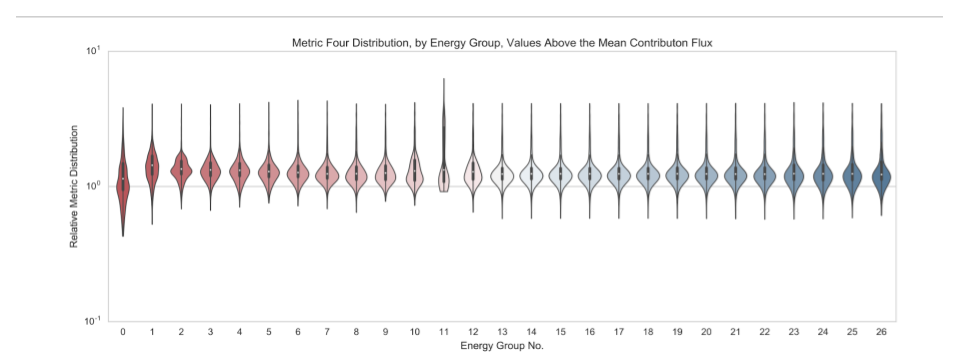
Above: Anisotropy Metric 4 Distribution ( $\psi^{c}_{max:avg}/\psi^{\dagger}_{max:avg}$ ), by Energy Group, in Regions where the Contributon Flux is High
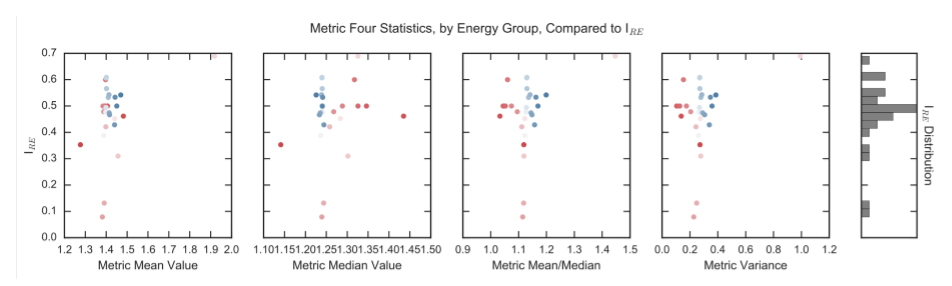
Below: Trend Results for Anisotropy Metric 4 as Related to the Ratio of Relative Errors $RE_{\Omega}/RE_{CADIS}$
Key Takeaways from the $\Omega$-methods
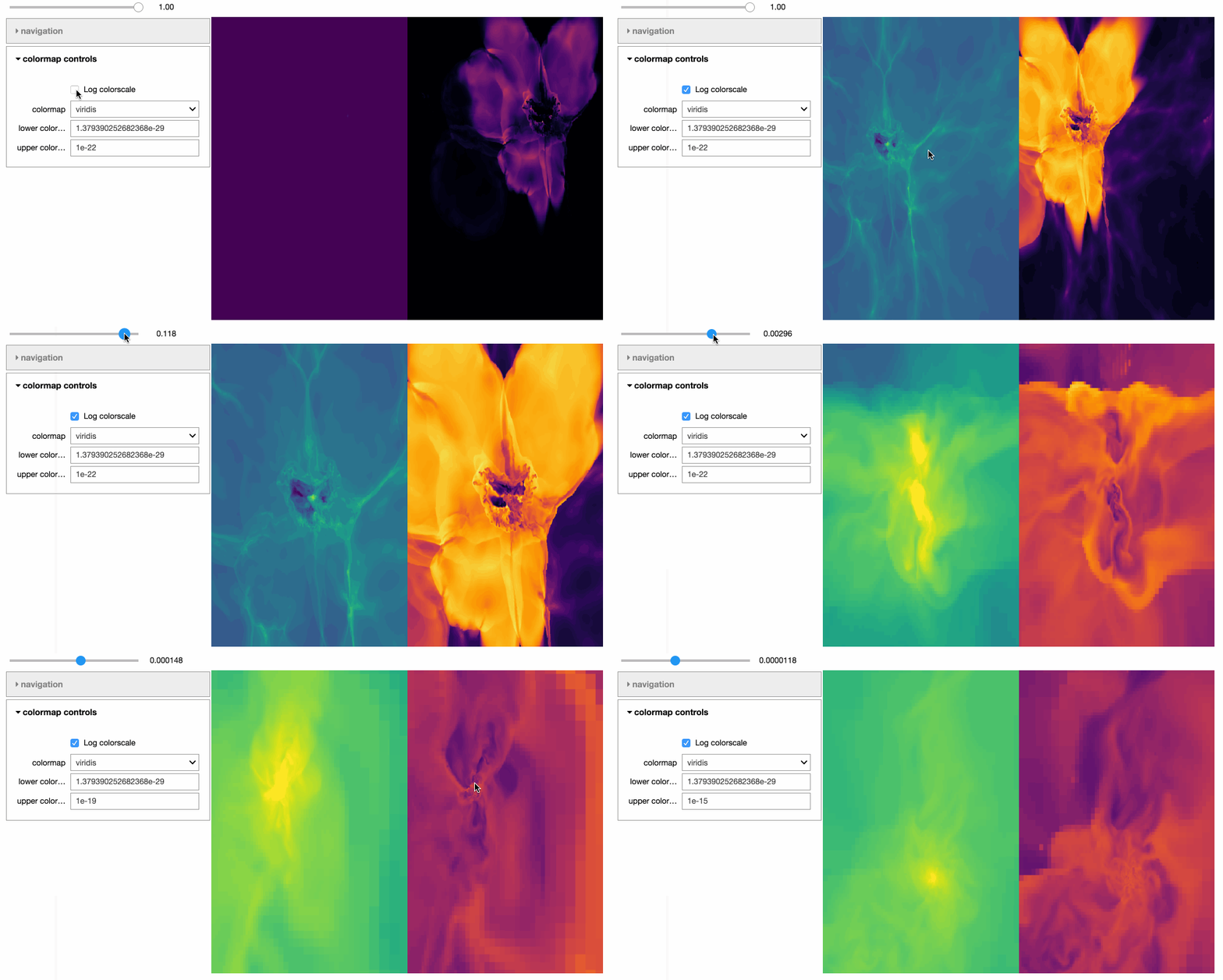
yt and widgyts
Project website Project repository







↓
↓
Analysis and Visualization
Domain Context System
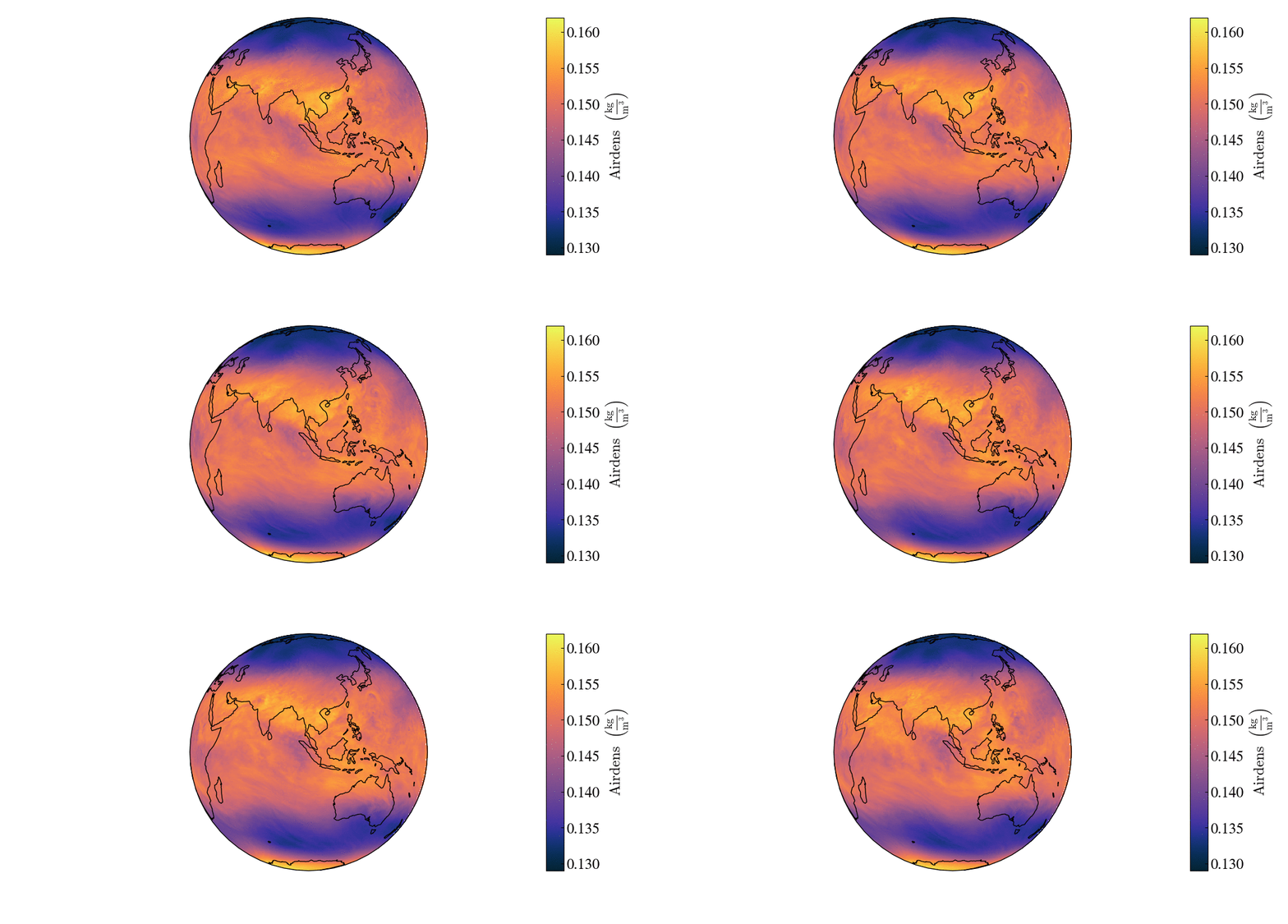
- Weather and Climate
- Oceanography and Hydrology
- Whole-earth seismography and tomography
- Observational Astro
- Nuclear Engineering
- Neuroscience
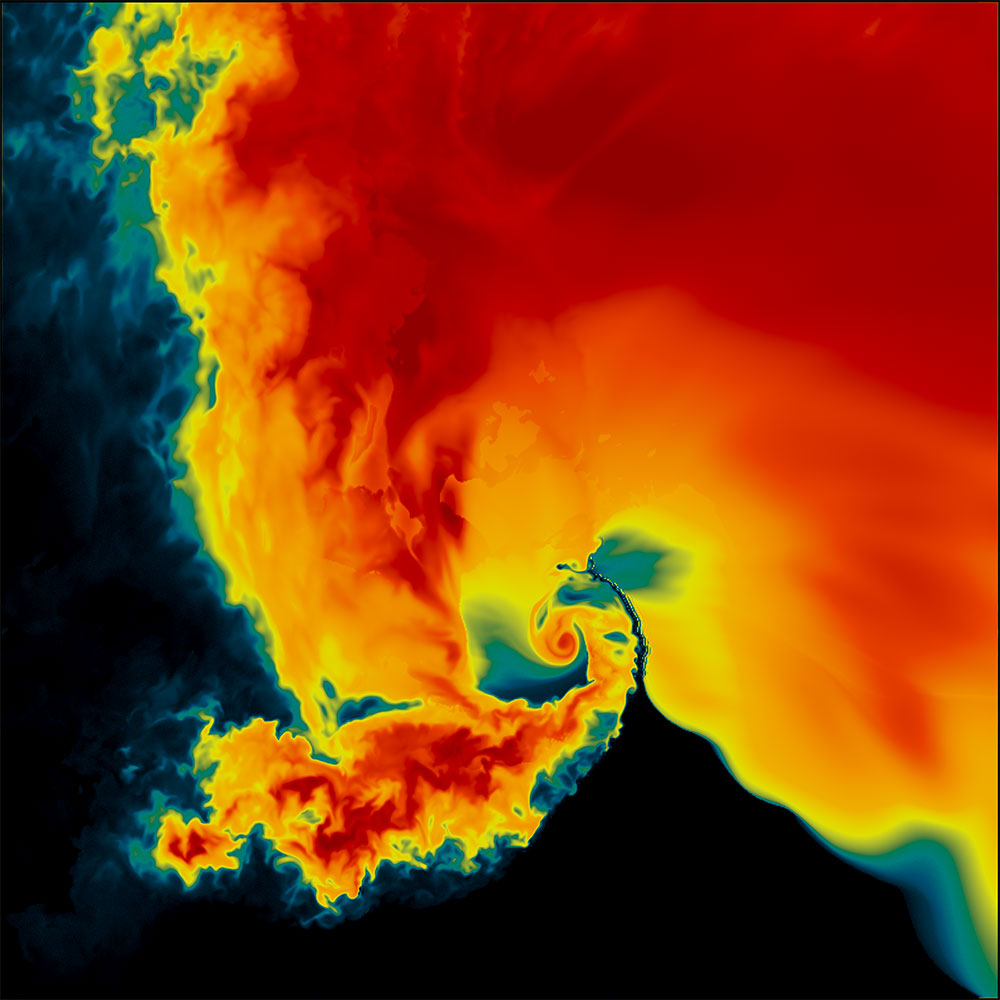
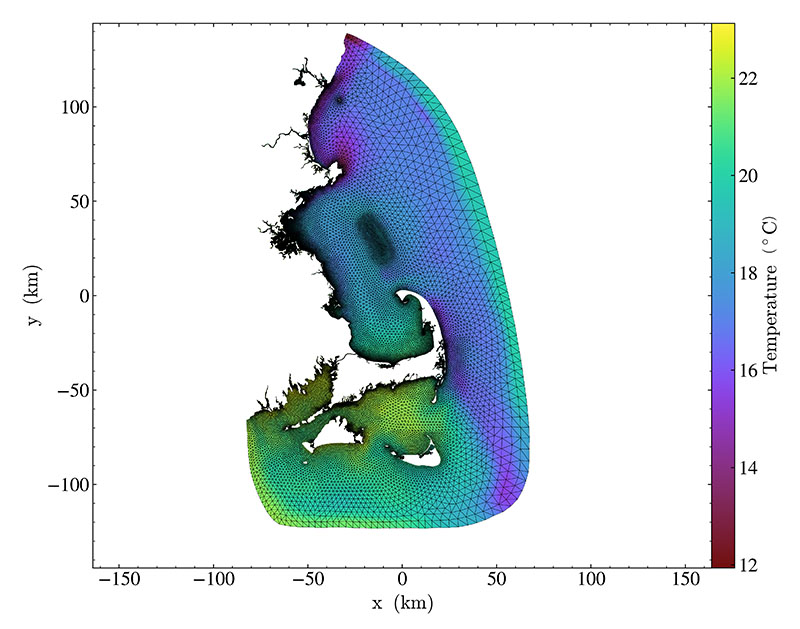
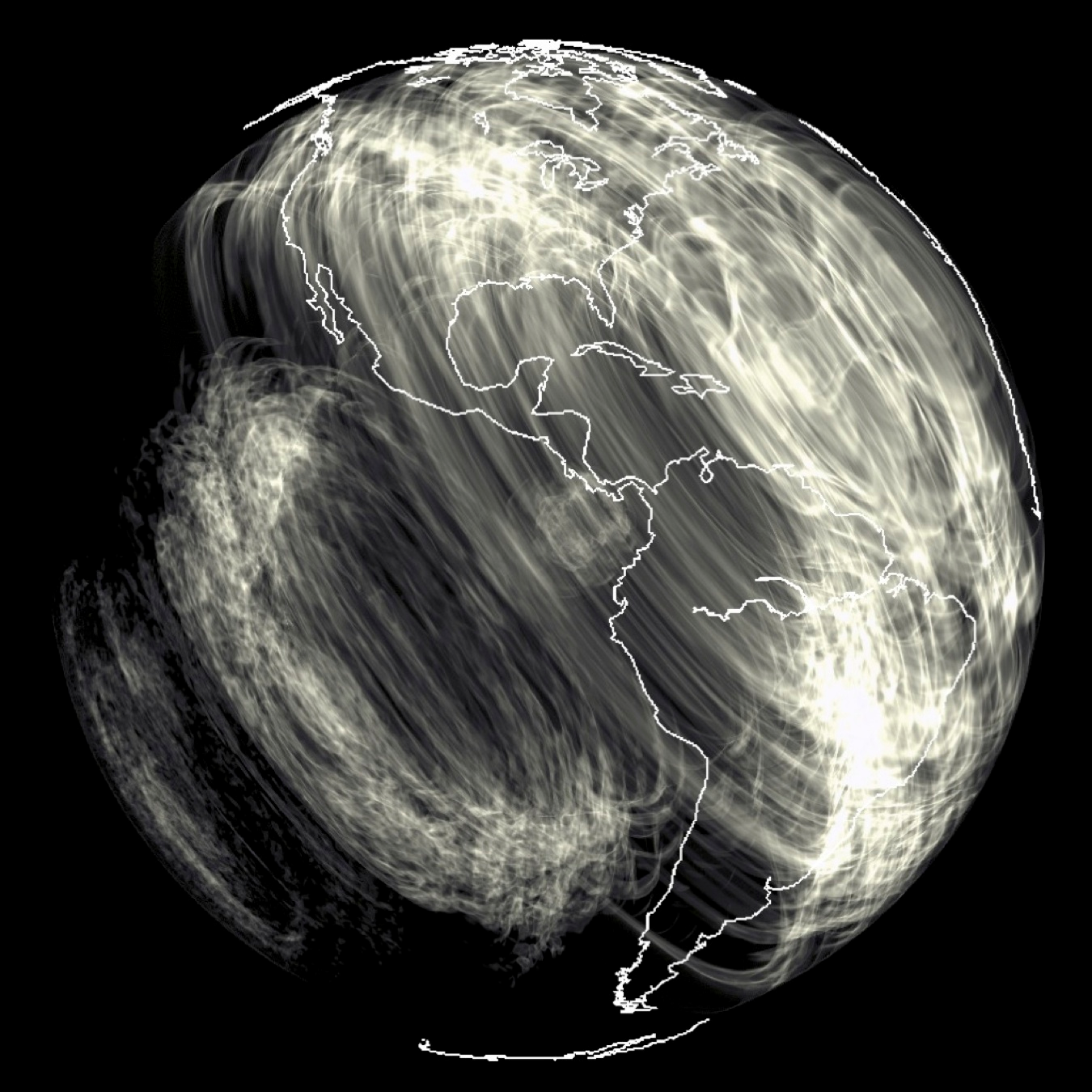
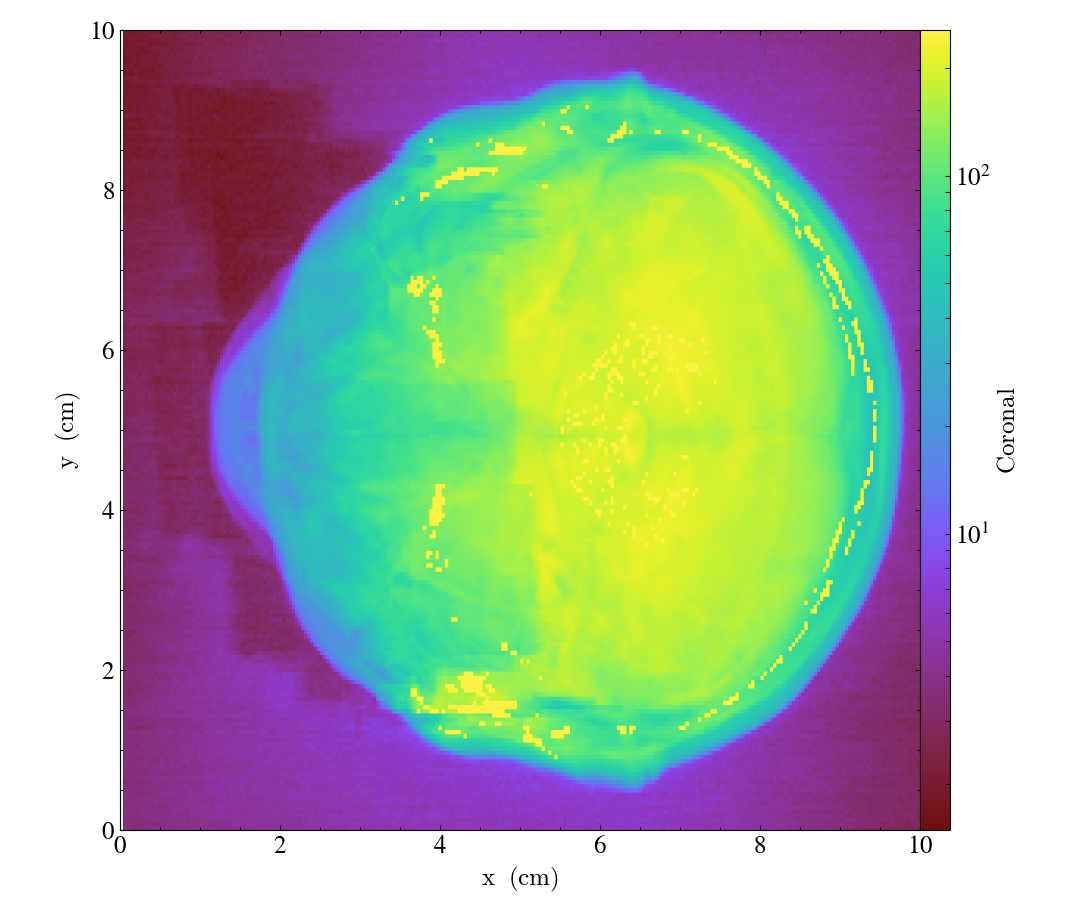
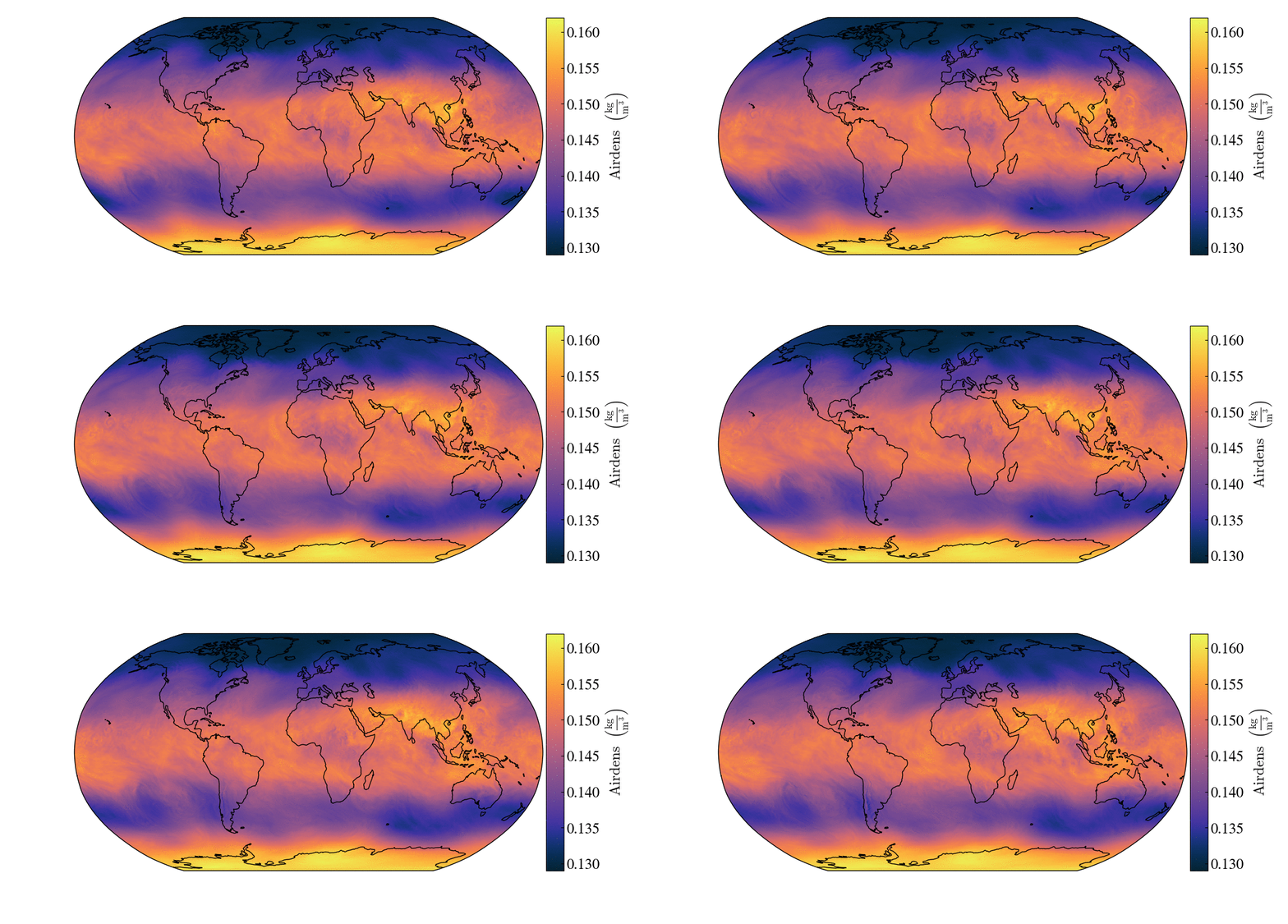
Geographic Projections
Data Science In Nuclear Engineering
Nuclear Data: Detection --> Data Reduction --> Format --> Human-Readable/Machine-Readable --> Simulation
Coupled Reactor Multiphysics: High Dimensionality + Coupled Fields, data selection, minimization + visualization
Real-Time Grid Monitoring/Response: Multiply-Sourced, Time-Series Data --> Cleaning --> Response Metrics --> GUI for human interaction
Materials Selection and Design: Using ML optimization techniques to minimize compute time for parametric studies
The Perfect Match
...in Interdisciplenary Heaven
Using data science methods and best practices in scientific computing will help us do better, more reproducible, robust research
Practicing the skills we learn in scientific training will help us be better data scientists
Computing makes our lives better as scientists
Tools for your science





Data Science for Fun
Acknowledgements
- Matthew Turk
- Rachel Slaybaugh
- Tara Pandya
- Seth Johnson
- Steven Hamilton
- Garret Baltz
- David Krumwiede
- Nathan Goldbaum
- Britton Smith
- Katy Huff
- Denia Djokic
- Lakshana Huddar
- Alejandra Jolodosky
- Patricia Schuster
Thank You!
Madicken Munk
twitter:@munkium github:@munkmhttps://munkm.github.io/2020-02-20-UF
This publication is supported in part by the Gordon and Betty Moore Foundation's Data-Driven Discovery Initiative through Grant GBMF4561 to Matthew Turk and by the Department of Energy under award number DE-NE0008286 to Rachel Slaybaugh.

Data Science and Nuclear Engineering: A Perfect Match by Madicken Munk is licensed under a Creative Commons Attribution 4.0 International License.
Based on a work at http://munkm.github.io/2020-02-20-UF.
Nuclear Engineering helped Data Science Today
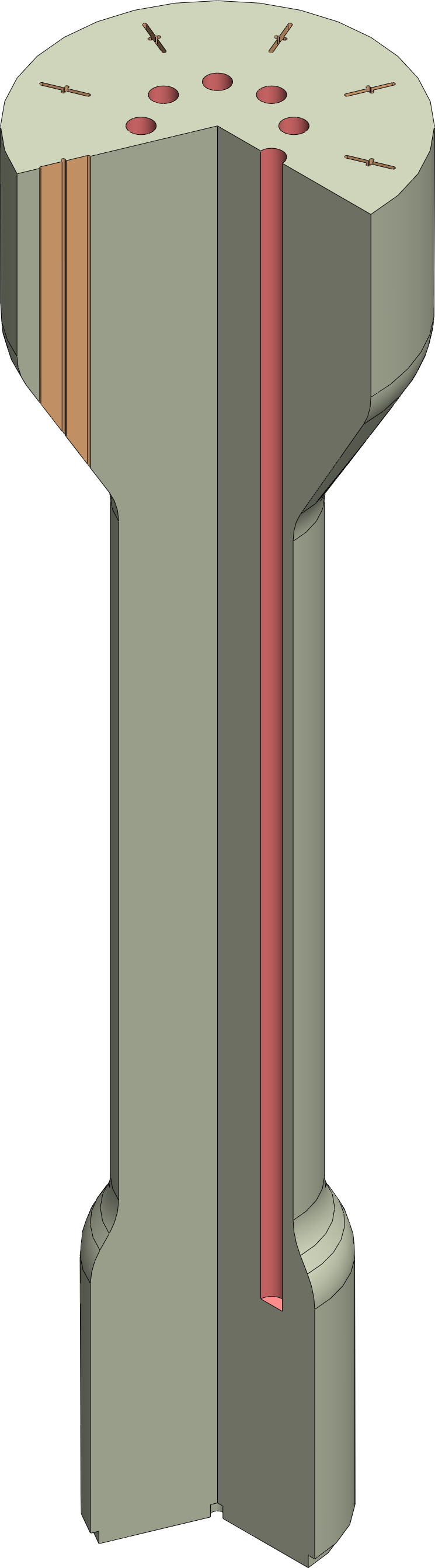
Central Reflector Lifetime Estimates
Use MCNP to get the fluence data for the reflector
↓
Use fluence and experimental data to calculate radiation-induced strain
↓
Use strain calculation to impose a pseudo-temperature distribution in FEM
↓
Use FEM and fluence buildup to determine lifetime
Implementing Radiation-Induced Swelling
Redesign of the PB-FHR Central Reflector
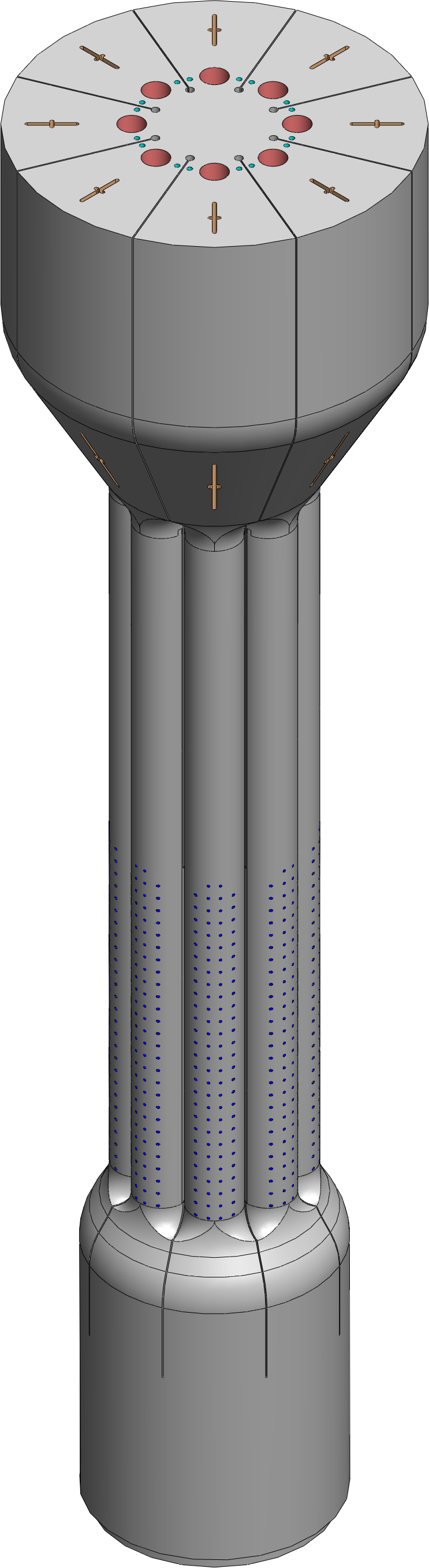
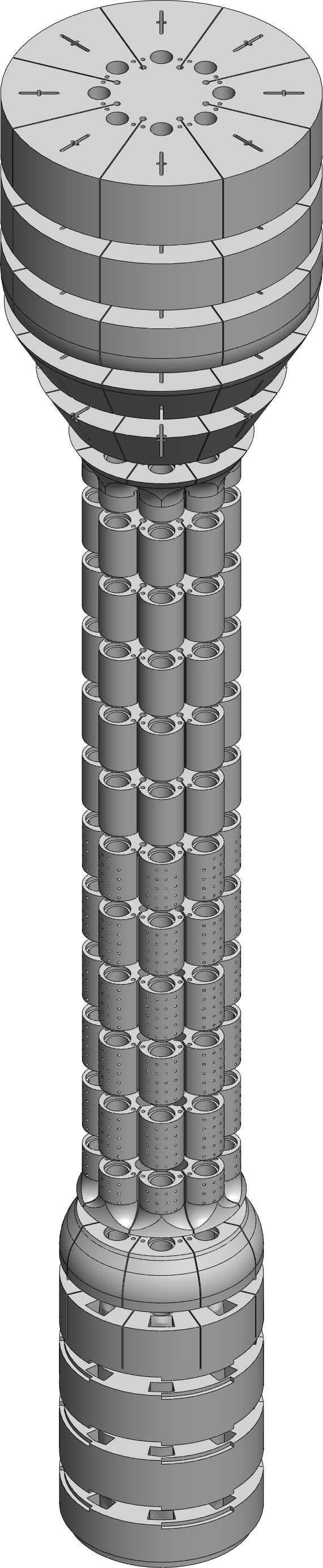
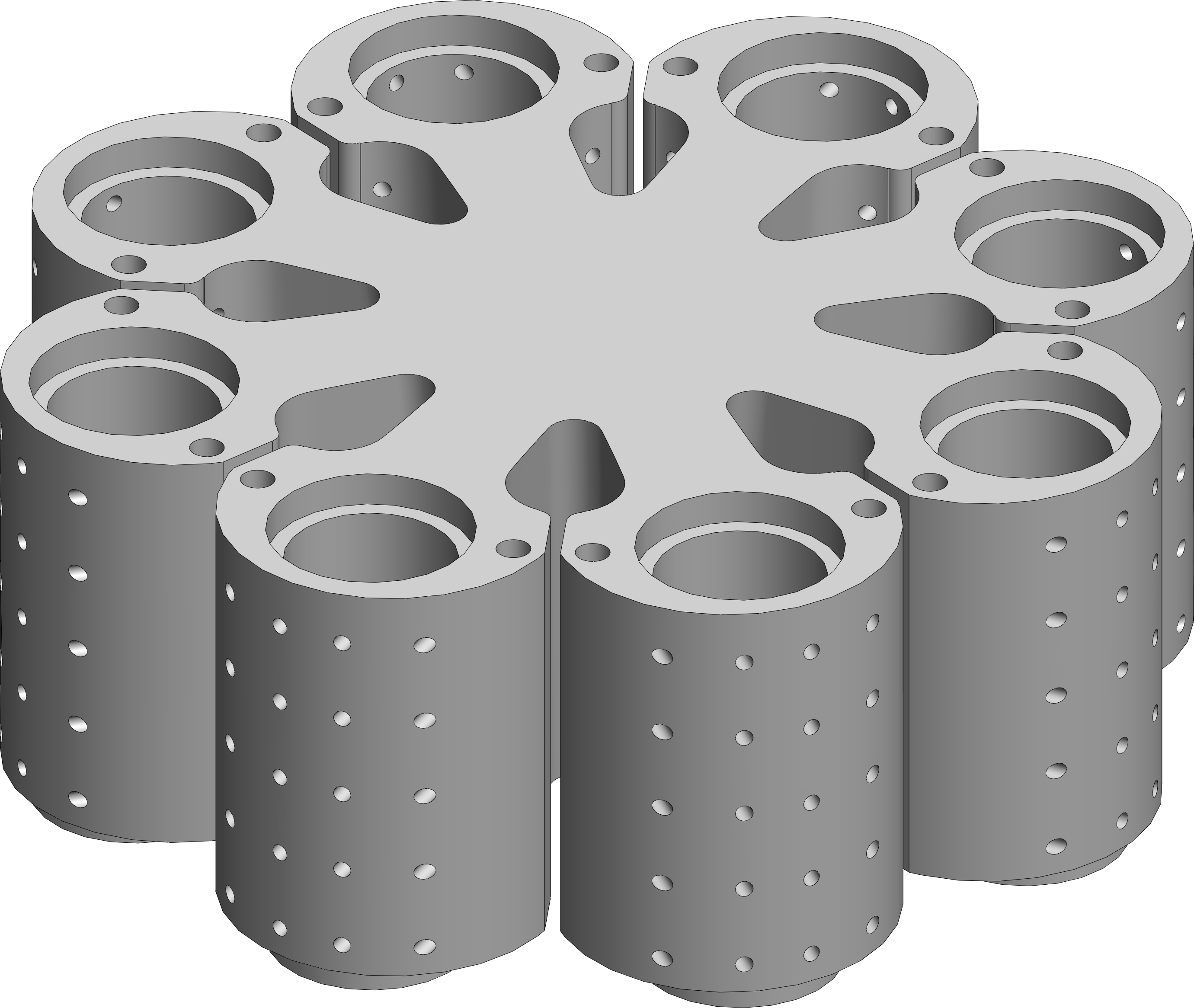
Future Work: Lifetime Estimate
Idea: Perform lifetime evaluations on core components in emerging reactor designs based on coupled physics
Deliverable: software, lifetime characterization
Collaborators: Kairos Power, Westinghouse, INL
Funding: DOE-NE, ARPA-E, SBIR
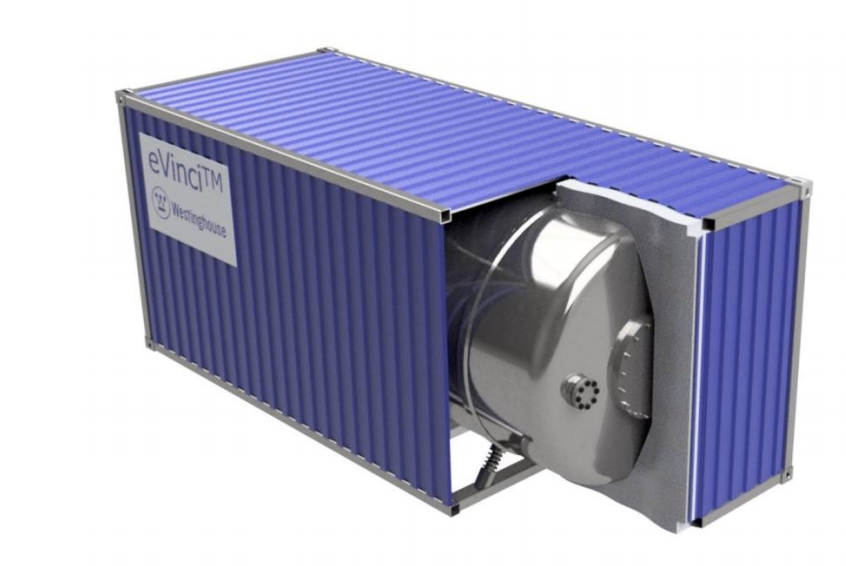
Image Credit: Westinghouse eVinci micro reactor link
Key Takeaways from the Lifetime Estimate
The forward neutron transport equation:
\[ \begin{multline} \hat\Omega \cdot \nabla \psi (\vec {r} ,E,\:\hat\Omega)+\Sigma _{ t } (\vec{r},E)\psi (\vec { r } ,E,\:\hat\Omega) = \\ \int _{ 4\pi } \int _{ 0 }^{ \infty } \Sigma _{ s }(E'\rightarrow E, \hat\Omega'\rightarrow\hat\Omega)\psi (\vec { r } ,E',\: \hat\Omega')dE' \:d\hat\Omega' + q_{e}(\vec { r } ,E, \:\hat\Omega). \end{multline} \]The adjoint neutron transport equation:
\[ \begin{multline} \hat\Omega \cdot \nabla \color{teal}{\psi^{\dagger}} (\vec {r} ,E,\:\hat\Omega)+\Sigma _{ t } (\vec{r},E)\color{teal}{\psi^{\dagger}} (\vec { r } ,E,\:\hat\Omega) = \\ \int _{ 4\pi } \int _{ 0 }^{ \infty } \Sigma _{ s }(\color{violet}{E\rightarrow E'}, \color{purple}{\hat\Omega\rightarrow\hat\Omega'})\color{teal}{\psi^{\dagger}} (\vec { r } ,E',\: \hat\Omega')dE' \:d\hat\Omega' + \color{teal}{q_{e}^\dagger}(\vec { r } ,E, \:\hat\Omega). \end{multline} \]The adjoint solution can be used to make an importance map for a desired outcome.
An exact adjoint solution can be used to obtain a zero variance Monte Carlo solution.
Importance and the Adjoint
Notation:
$\langle ab \rangle = \int a(P)b(P) dP$Detector response
$ \begin{align} R &= \langle \sigma_d \psi \rangle \\ &= \langle q^{\dagger} \psi \rangle \\ &= \langle q \psi^{\dagger} \rangle \\ \end{align} $Point source
$q ( \vec{r}, E, \hat{\Omega}) = \delta(\vec{r}-\vec{r_0})\delta(\vec{E}-\vec{E_0})\delta(\vec{\hat{\Omega}}-\vec{\hat{\Omega}_0})$Response = adjoint flux
$R = \psi^{\dagger} (r_0, E_0, \Omega_0)$The CADIS method
Biased source distribution
Starting weight of the particles
Weight window target values
$\\ \hat{q}(\vec{r},E) = \frac{\phi^{\dagger}(\vec{r},E)q(\vec{r},E)}{R} \\$
$\\ w_{0}(\vec{r},E) = \frac{q(\vec{r},E)}{\hat{q}(\vec{r},E)} = \frac{R}{\phi^{\dagger}(\vec{r},E)} \\$
$\\ w(\vec{r},E) = \frac{R}{\phi^{\dagger}(\vec{r},E)}$
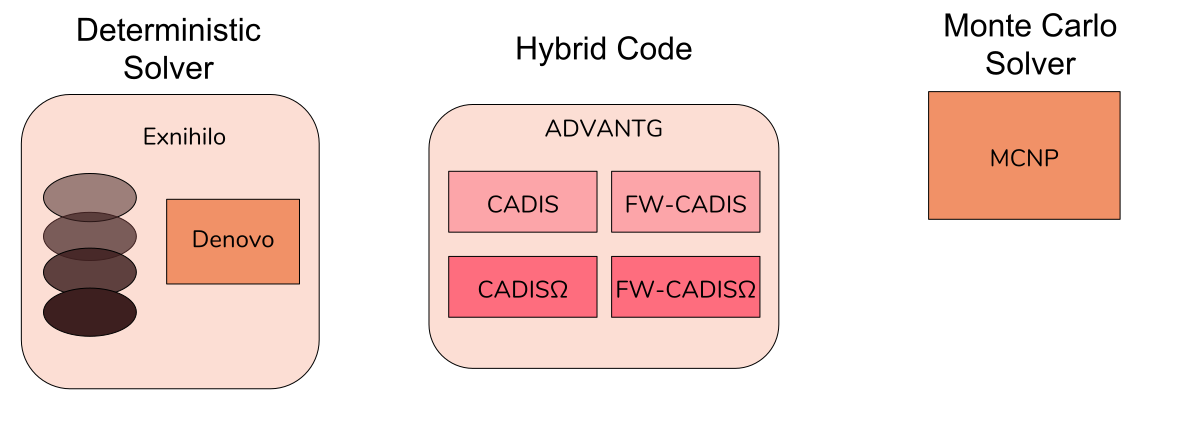
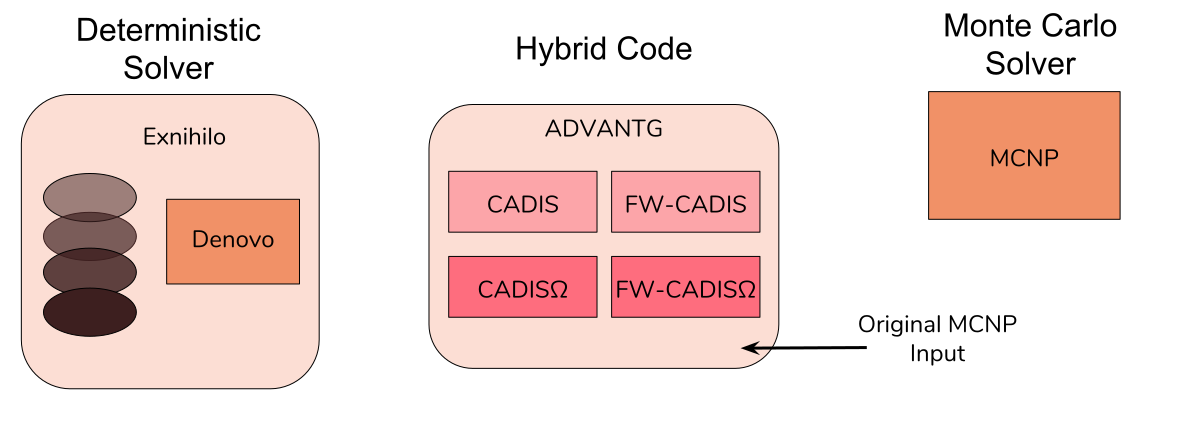
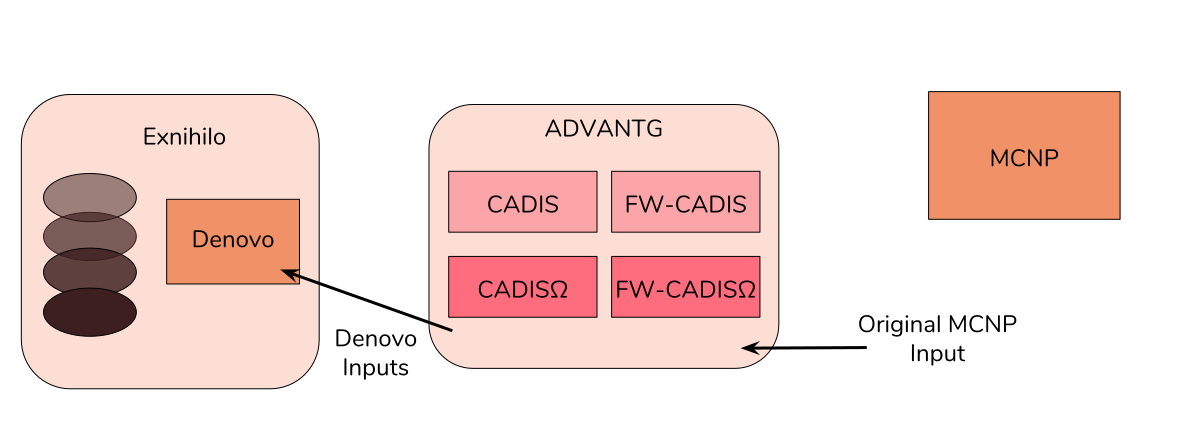
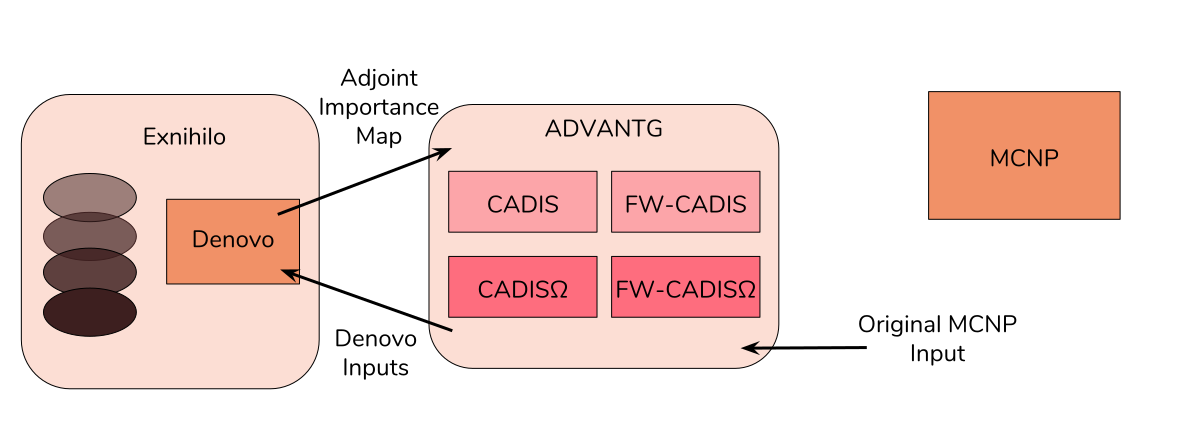
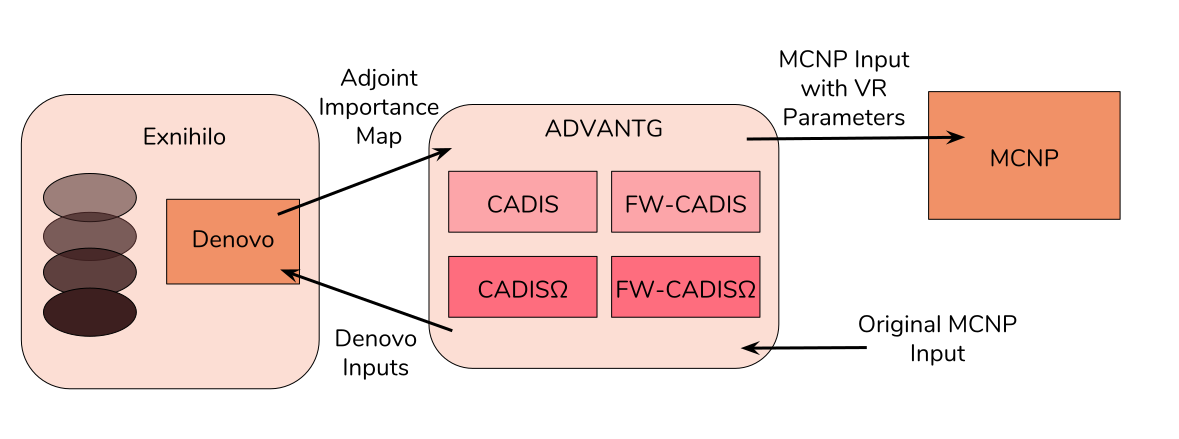
MCNP, X. Monte Carlo Team, MCNP–A General Purpose Monte Carlo N-Particle Transport Code, Version 5. LA-UR-03-1987, Los Alamos National Laboratory, April 2003.
Evans, Thomas M., et al. "Denovo: A new three-dimensional parallel discrete ordinates code in SCALE." Nuclear technology 171.2 (2010): 171-200.
Mosher, Scott W., et al. "ADVANTG—an automated variance reduction parameter generator." ORNL/TM-2013/416, Oak Ridge National Laboratory (2013).
Anisotropy Metrics
Steel Beam in Concrete
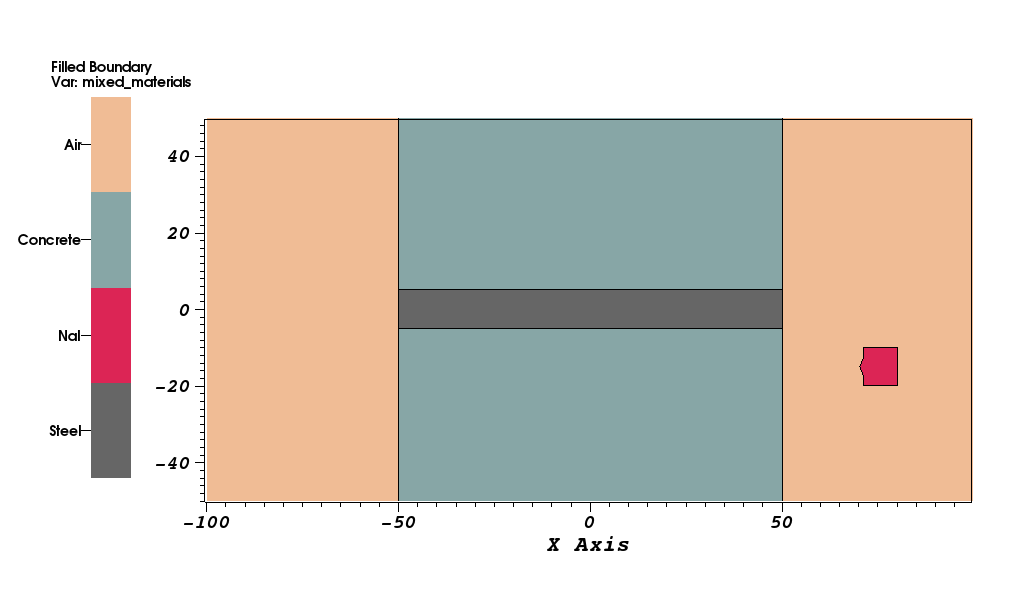
Steel Beam in Concrete
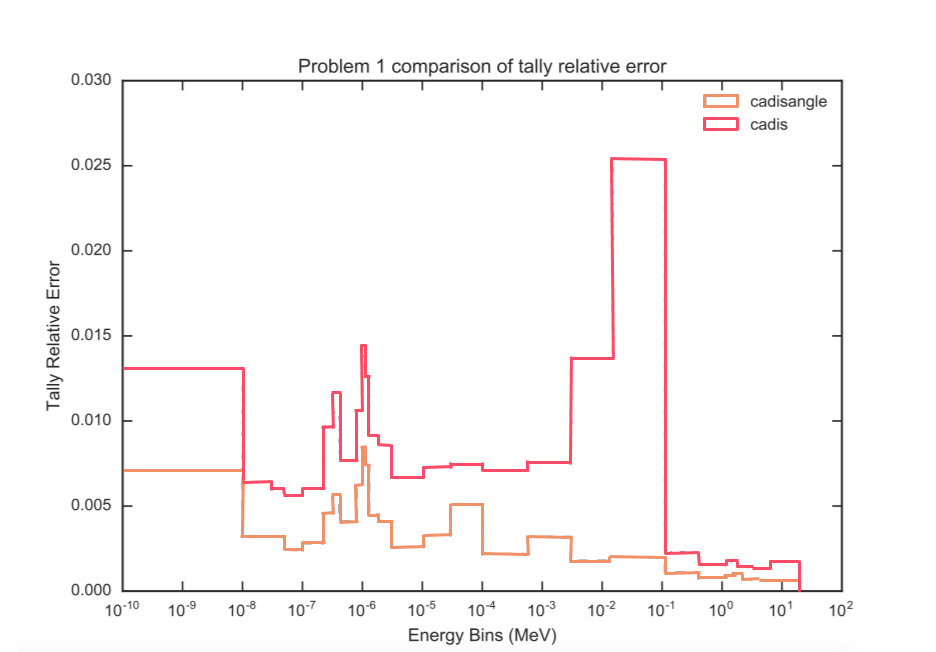
Above: Figure of Merit results for CADIS and CADIS-$\Omega$ for various tally regions of interest
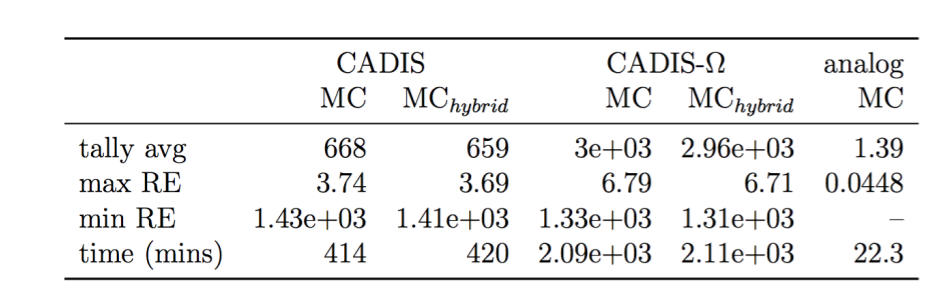
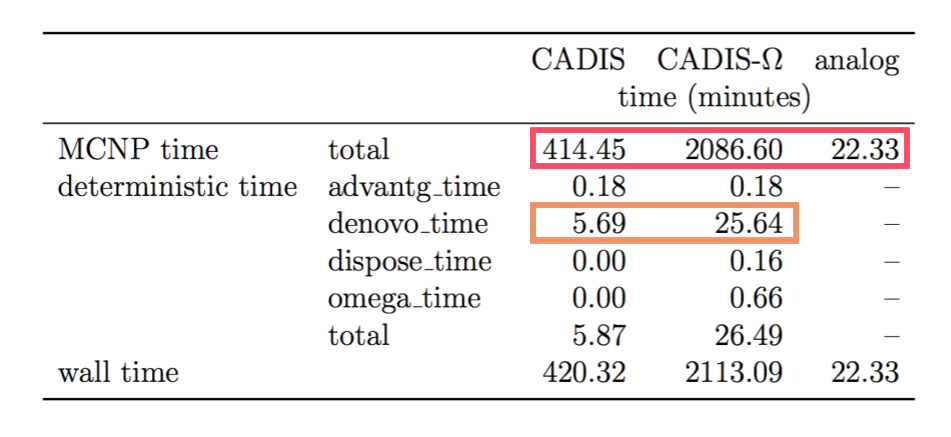
Below: Timing results for CADIS and CADIS-$\Omega$
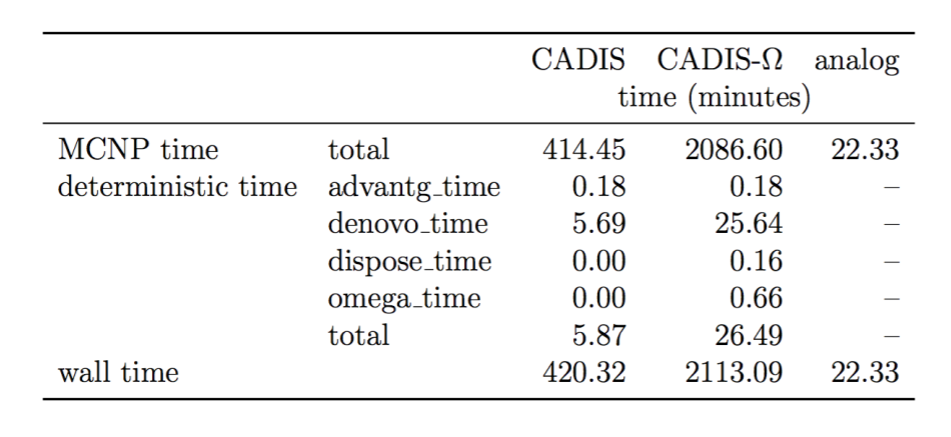
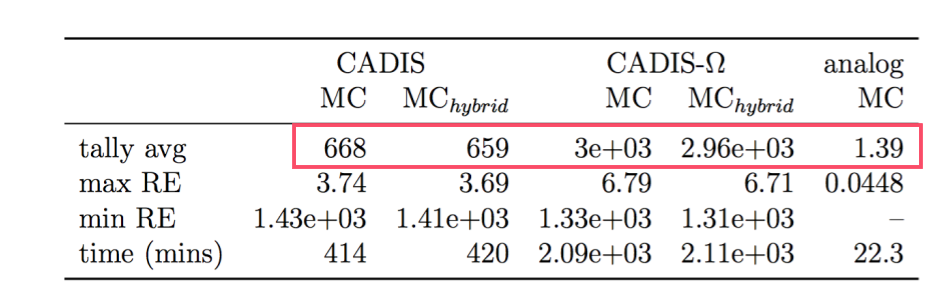
Above: Figure of Merit results for CADIS and CADIS-$\Omega$ for various tally regions of interest
Below: Timing results for CADIS and CADIS-$\Omega$
Future Work
Idea: Use anisotropy metrics to characterize beyond $\Omega$-methods, build out suite of novel analysis tools for nuclear engineering with PyNE+yt
Deliverable: Robust scheme to recommend method based on problem type, open-source package to calculate anisotropy metrics
Data Science Influence: Use methods from other domains (halo finding (astro)), cleaning and filtering methods
Future Work
Idea: Use LDO quadrature set to do angle biasing in Monte Carlo
Deliverable: Angle biasing in Monte Carlo for low angular refinement
Collaborators: ORNL, UC Berkeley Neutronics
Funding: DOE-NE, ORNL subcontract